




LIFTING TEMPO · STRENGTH AFTER 40
Most of us think of a lift as the push or the pull. The quieter half of every repetition, the part where you lower the weight, may deserve more of your attention.
Eccentric training means putting deliberate emphasis on the lowering phase of an exercise: easing down into a squat, letting a dumbbell descend under control, or lowering your chest toward the floor in a push-up. It is a simple change that needs no new equipment, and a growing body of research suggests it can build strength and everyday function while feeling less exhausting than many people expect. Here is what the evidence shows, the one side effect to plan for, and how to bring slower lowering into the workouts you already do.
What eccentric training actually means
Every repetition has phases. In the concentric phase, a muscle shortens as it produces force, such as your thighs straightening your knees as you stand up from a chair. In the eccentric phase, the muscle lengthens while still working, acting like a brake: your thighs controlling your descent as you sit back down. A pause in between, where the muscle holds without moving, is isometric work.
You already do a lot of eccentric work without thinking about it. Walking downstairs, stepping off a curb, setting a heavy box on the floor and lowering yourself onto a low sofa all depend on muscles that lengthen under control. That is part of why this kind of strength matters so much in daily life, and why training it on purpose makes sense.
What the research shows for eccentric training
A 2022 systematic review and meta-analysis by Klemen Čretnik and colleagues in Frontiers in Sports and Active Living compared eccentric-focused programs with conventional resistance training in adults over 55, drawing on 19 papers. The eccentric programs produced greater improvements in several tests of everyday function, including the timed up-and-go and the 30-second sit-to-stand. For knee strength, the pooled result leaned toward eccentric training but was not statistically significant, and effects on body composition were unclear.
The authors concluded that eccentric exercise is superior to, or at least as good as, conventional training for preserving health in older adults. That is a measured verdict rather than a revolution: eccentric work is not magic, but it looks like an effective and practical way to train, especially for the movements that keep you independent and capable.
A 2026 review in the Journal of Sport and Health Science by Kazunori Nosaka of Edith Cowan University makes the case more broadly. According to a summary of the review, about five minutes a day of eccentric movements such as chair squats, heel drops and wall push-ups can produce meaningful improvements in strength and health. “You can gain strength without feeling as exhausted,” Nosaka said, adding that when exercise feels achievable, people keep doing it.
The catch: soreness, and how to sidestep it
Eccentric work has one well-known drawback. A review by Stéphanie Hody and colleagues in Frontiers in Physiology in 2019 notes that unaccustomed eccentric exercise is known to cause muscle damage and delayed pain, the familiar stiffness that shows up after a new workout. The Nosaka summary likewise mentions that mild soreness can occur, especially in beginners.
The fix is gradual exposure. Hody and colleagues identify repeated sessions of submaximal eccentric contractions, with intensity increased progressively over the course of training, as the most useful preventive strategy. In practice, that means your first eccentric sessions should feel easy: lighter loads, fewer sets and only one or two exercises. Your muscles adapt quickly, and the same session that leaves you stiff in week one will barely register a few weeks later. Our guide to muscle soreness after a workout explains why soreness is not the measure of a good session.
Six ways to add slow lowering to your routine
The simplest method is to change your tempo. Lift at a normal, controlled pace, then lower over a slow count of three or four. Keep breathing steadily throughout rather than holding your breath. Start with the easiest version of each exercise and progress only when the slow lowering feels smooth from the first repetition to the last.
| Exercise | The eccentric phase | Easier version | Next step |
|---|---|---|---|
| Chair squat | Sitting down slowly | Use a higher seat and push off with your hands to stand | Lower seat, then hold a dumbbell at your chest |
| Push-up | Lowering your chest | Hands on a wall or kitchen counter | Hands on a sturdy bench, then the floor |
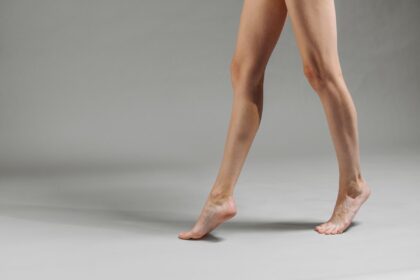
| Heel drop | Lowering your heels | Rise and lower on both feet on flat ground, holding a counter | On the edge of a step with a handrail, lowering slowly |
| Step-down | Lowering one foot to the floor from a step | A very low step with a rail to hold | A higher step, then a light dumbbell in one hand |
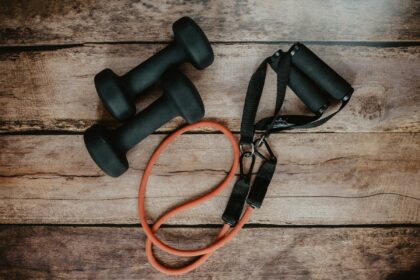
| Dumbbell row or curl | Letting the weight descend | A light weight lowered slowly | A heavier weight with the same slow lowering |
| Lowering-only pull-up | Lowering your body from the bar | Band-assisted or machine-assisted pulldown, lowering slowly | Step up to the top from a box, then lower under control |
The lowering-only pull-up is the most advanced option on the list and suits people who already train their upper back regularly. For most readers, chair squats, wall or counter push-ups and heel drops make an excellent starting trio that takes only a few minutes.
Fitting eccentric work into your week
You do not need a separate program. CDC guidelines call for muscle-strengthening activity on at least two days a week, and eccentric emphasis can live inside those sessions. One approach is to choose two or three exercises per workout and use slow lowering on those only, while the rest of the session stays as it is. Another is to add a short daily routine of the three starter moves, in the spirit of the five-minute approach Nosaka describes.
- Weeks one and two: one or two sets of 6 to 8 slow-lowering repetitions of two exercises, twice a week.
- Weeks three and four: add a third exercise or a second set, if soreness has settled within a day or so.
- After a month: progress the load or the exercise version, following the same gradual approach you use for any lift.
Slow lowering fits naturally with the principle of progressive overload: small, steady increases over time, not big jumps.
Safety notes before you start
Slow, controlled lowering is generally a joint-friendly way to train, but a few cautions apply. Breathe out on the effort and keep breathing during the slow descent; holding your breath can spike blood pressure, a point covered in our guide to breathing during strength training. Use a rail, wall or counter for any exercise that challenges your balance, especially heel drops and step-downs. Sharp or joint pain is a signal to stop, unlike the dull fatigue of working muscles.
Talk with your doctor before starting or intensifying strength training if you have heart disease, high blood pressure, diabetes or kidney disease, or if you are recovering from surgery or an injury. If you have a tendon problem, such as Achilles or knee pain, a physical therapist can tailor eccentric exercises to your situation rather than leaving you to guess.
FIVE-MINUTE STARTER
A slow-lowering routine for today
- Chair squat: stand up normally, sit down over a slow count of four. Repeat 6 times.
- Counter push-up: push away normally, lower your chest over a slow count of four. Repeat 6 times.
- Heel drop: holding a counter, rise onto your toes and lower over a slow count of four. Repeat 8 times.
- Rest a minute and repeat the circuit once if it felt easy.
- Tomorrow, note any soreness and keep the next session the same until it fades.
SOURCES AND FURTHER READING
This article is for general information and is not a substitute for personal medical advice.
Are you a fitness or wellness professional with a member journey to share?