



HIP MOBILITY · MOBILITY AND BALANCE
If your first few steps after a long drive feel stiff, or putting on socks takes more effort than it used to, your hips are asking for some attention.
Hips that move freely make walking, climbing stairs, getting in and out of the car and bending to pick something up feel easier. Hours of sitting tend to work against that. The encouraging part is that a short, regular hip mobility routine combining gentle stretches with a little strength work can help you feel looser and move with more confidence. Below you will find why hips stiffen, what the research shows, and a ten-minute routine you can do most days.
Why hips stiffen, and why it matters
The hip is a deep ball-and-socket joint wrapped in some of the largest muscles in the body: the glutes behind, the hip flexors in front, the inner-thigh muscles on one side and the outer-hip muscles on the other. When those muscles spend most of the day in one position, they can feel tight and the joint can lose some of its easy range.
Inactivity is a major culprit. A Cleveland Clinic article notes that nearly 1 in 4 American adults sit for more than eight hours a day, which can leave hips tight, less flexible and uncomfortable to move. Physical therapist Rebecca Justen, DPT, explains there that the major muscles around the hips help preserve the joint’s range of motion, and that stretching and strengthening them can make walking, standing and climbing stairs more manageable.
Hip extension, the ability to let your thigh travel behind your body, is especially worth protecting. It helps you take a full, natural stride, and it is the range a hip flexor stretch is designed to improve.
What the research says about stretching tight hips
A controlled trial published in 2003 in the Archives of Physical Medicine and Rehabilitation put a simple hip flexor stretch to the test. Kerrigan and colleagues assigned 96 healthy older adults either to a hip flexor stretching program, done twice a day at home for 10 weeks after one instruction session, or to a comparison group that stretched the shoulders instead. Static peak hip extension improved modestly in the hip-stretching group, from 6.1 to 7.7 degrees, while the comparison group showed no change. Hip extension while walking trended upward too, although those changes were not statistically significant.
The takeaway is realistic rather than dramatic. Regular, unsupervised stretching produced a measurable gain in hip range over about ten weeks, and it took consistency, not intensity, to get there. That is why the routine below is designed to be short enough to repeat often.
Ground rules before your hip mobility routine
Mayo Clinic’s guide to stretching offers a few principles that apply throughout:
- Warm up first. Five to 10 minutes of light activity, such as walking, prepares your muscles to stretch.
- Hold, don’t bounce. Ease into each stretch slowly and hold it for about 30 seconds.
- Stop at a gentle pull. If you feel pain, you have stretched too far.
- Be consistent. Stretch your major muscle groups at least two to three days a week.
Mayo also advises people with osteoporosis to avoid the knee-to-chest stretch. If you have had a hip replacement or other hip surgery, follow the movement limits your surgeon or physical therapist gave you, since some positions in general routines may not be appropriate for you.
The 10-minute hip mobility routine
Do this sequence after a walk or another light warm-up. The moves come from Cleveland Clinic’s hip-opening recommendations and Mayo Clinic’s stretching guide, and they mix stretches for the front, back and inner hip with a strength move for the glutes. Use a mat or carpet, and keep a sturdy chair nearby for support.
| Move | How long | What you should feel |
|---|---|---|
| Kneeling hip flexor stretch | About 30 seconds per side, twice | A stretch along the front of the back thigh and hip |
| Lying figure-four | 5 to 8 breaths per side | A stretch deep in the outer hip and buttock |
| Butterfly stretch | As long as comfortable, about 30 seconds | A gentle stretch along the inner thighs |
| Bridge | Hold 5 to 8 breaths, repeat 3 to 5 times | Your glutes working to extend the hips |
| Squat-to-stand with a chair | Hold the bottom 3 seconds, 5 to 10 times | Hips, knees and ankles opening together |
| Child’s pose | As long as comfortable to finish | A relaxed stretch through the hips and lower back |
- Kneeling hip flexor stretch. Kneel on one knee with a folded towel underneath and the other foot flat in front. Keep your back straight and your abdominal muscles lightly braced, then shift your weight forward until you feel a stretch in the front of the kneeling-side thigh.
- Lying figure-four. Lie on your back with knees bent, cross one ankle over the opposite knee and gently draw the legs toward you.
- Butterfly stretch. Sit tall with the soles of your feet together, lean forward slightly and let your knees fall toward the floor without forcing them.
- Bridge. Lie on your back with knees bent and feet flat, press through your heels and lift your hips until your body forms a line from shoulders to knees.
- Squat-to-stand. Holding the back of a chair, sit your hips down into a comfortable squat, pause, then stand.
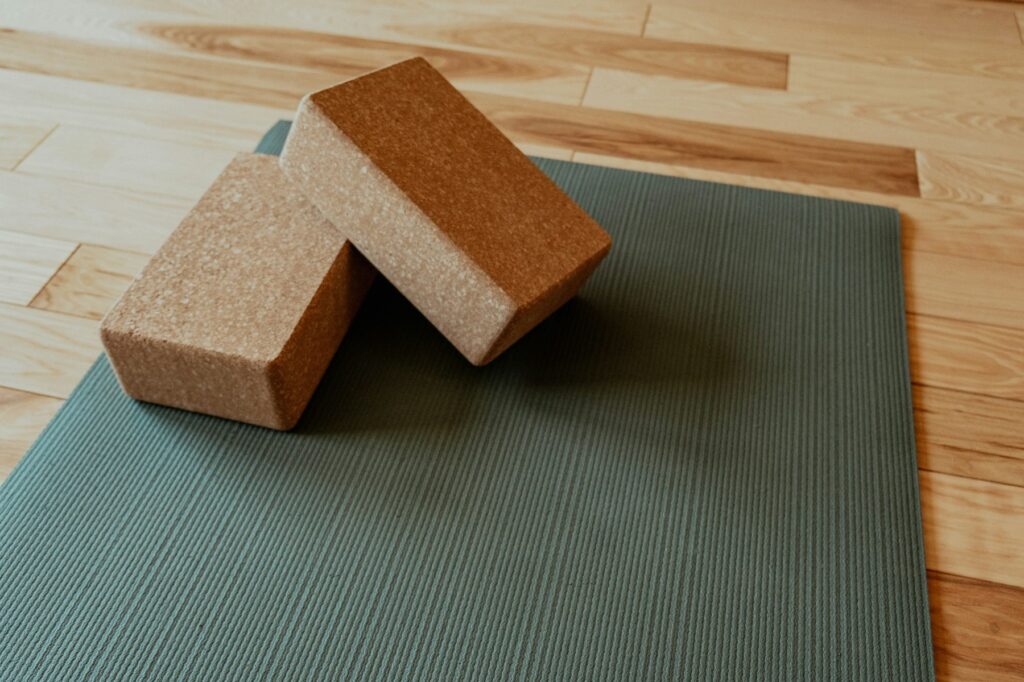
- Child’s pose. Kneel, widen your knees, sit back toward your heels and rest your forehead on the floor or a block.
Making the routine harder as you improve
When the basic sequence feels easy, Cleveland Clinic suggests several intermediate options. The couch stretch, kneeling with one shin resting against a couch or bench behind you, deepens the hip flexor stretch. The low lunge, with your back knee on the floor, and the runner’s lunge, stepping one foot to the outside of the same hand from a plank, open the front of the hip further. Pigeon pose and the yogi squat are more demanding still, so add them only if your knees and hips tolerate them comfortably.
Mobility also lasts longer when you use your new range under control. Strength exercises that move the hips through a full range, such as split squats and step-ups, help you own the motion you gain from stretching. Because the ankle and hip work as a team in every step, our guide to ankle mobility exercises pairs well with this routine.
Expect some mild, dull soreness as muscles adjust to being lengthened. Cleveland Clinic advises contacting a healthcare provider or physical therapist for sharp, pinpoint pain, pain that lasts more than a few hours, or pain that makes stretching or daily activities difficult.
Fitting it into a day of sitting
The best time for a hip mobility routine is whenever you will actually do it. Many people like it in the evening after a walk, when muscles are warm. Others split it up: a kneeling hip flexor stretch during a work break, bridges before bed, squat-to-stands while waiting for the coffee to brew. Breaking up long stretches of sitting with a few minutes of movement helps on its own, and our article on moving after a day at a desk offers more ideas.
Looser, stronger hips also make floor work easier. If getting down to the ground and back up is a goal, combine this routine with the steps in our guide to getting up off the floor.
TRACK YOUR PROGRESS
A simple two-week hip log
- Pick three fixed times this week for the full routine and put them on your calendar.
- Before your first session, note how putting on socks, getting out of the car and climbing stairs feel on a scale of easy, so-so or hard.
- Record which side feels tighter in the hip flexor and figure-four stretches.
- After two weeks, rate the same everyday tasks again and decide whether to add one intermediate move.
SOURCES AND FURTHER READING
Cleveland Clinic · Hip-Opening Stretches · Health Essentials
This article is for general information and is not a substitute for personal medical advice.
Are you a fitness or wellness professional with a member journey to share?