



NUTRITION FOR STRENGTH · HEALTHY AGING
You can train with real commitment and still see disappointing results if your plate is not keeping up. In midlife, protein becomes one of the quiet deciding factors in whether strength work pays off.
Protein advice can feel like a tug of war between supplement marketing and outdated rules of thumb. The research picture is calmer and more useful than either. The official minimum was designed to prevent deficiency in the general population, not to support adults who are lifting weights to stay strong in their 40s, 50s and 60s. Here is how to find a sensible daily target, spread it across your meals and get there with ordinary food.
Why protein deserves a second look after 40
Muscle is not fixed. Without regular strength training, adults lose muscle steadily as they age—Harvard Health Publishing estimates around 4 to 6 pounds per decade. Strength training is the primary signal that tells the body to build and keep muscle, and protein supplies the raw material.
Aging muscle also becomes somewhat less responsive to small servings of protein, a change researchers call “anabolic resistance.” That is one reason expert groups now suggest older adults aim above the basic recommendation. The international PROT-AGE study group recommended that healthy adults over 65 average at least 1.0 to 1.2 grams of protein per kilogram of body weight per day, with more for those who are active or recovering from illness. Midlife is the ideal time to build the eating habits that make those targets easy later.
Find your daily number
The Recommended Dietary Allowance is 0.8 grams per kilogram (about 0.36 grams per pound) of body weight—roughly 60 grams a day for a 165-pound adult. Think of it as a floor rather than a target if you are strength training.
For active adults trying to build or keep muscle, a practical range is about 1.2 to 1.6 grams per kilogram per day. The upper end comes from a meta-analysis of 49 trials in the British Journal of Sports Medicine, which found that the benefits of extra protein for strength-training gains leveled off at around 1.6 grams per kilogram per day.
| Body weight | Minimum (0.8 g/kg) | Active range (1.2–1.6 g/kg) | Per meal (about 0.4 g/kg) |
|---|---|---|---|
| 60 kg (132 lb) | 48 g | 72–96 g | about 24 g |
| 70 kg (154 lb) | 56 g | 84–112 g | about 28 g |
| 80 kg (176 lb) | 64 g | 96–128 g | about 32 g |
| 90 kg (198 lb) | 72 g | 108–144 g | about 36 g |
| 100 kg (220 lb) | 80 g | 120–160 g | about 40 g |
If you are carrying significant excess weight, a dietitian may suggest basing your target on a healthier reference weight instead of your current one.
Spread it across the day
How you distribute protein matters as well as the total. A common pattern is a light breakfast, a modest lunch and most of the day’s protein at dinner. A review in the Journal of the International Society of Sports Nutrition suggests a more even approach for people focused on building muscle: about 0.4 grams per kilogram per meal, across at least four meals, to reach 1.6 grams per kilogram per day.
For most adults that works out to roughly 25 to 40 grams at each main meal, plus a protein-containing snack if needed. Breakfast is usually the easiest meal to improve: swapping toast and coffee for Greek yogurt with nuts, or eggs with whole-grain toast, can add 20 grams or more without much effort.
What 30 grams looks like on a plate
Approximate protein content of common foods, based on values from the USDA FoodData Central database. Brands and preparation vary, so check labels where you can.
| Food | Portion | Protein (approx.) |
|---|---|---|
| Chicken breast, cooked | 3 oz (85 g) | 26 g |
| Salmon, cooked | 3 oz (85 g) | 22 g |
| Tuna, canned in water, drained | 3 oz (85 g) | 20 g |
| Cottage cheese, low-fat | 1 cup (about 225 g) | 25 g |
| Greek yogurt, plain | 6 oz (170 g) | 17 g |
| Lentils, cooked | 1 cup (about 200 g) | 18 g |
| Edamame, shelled, cooked | 1 cup (about 155 g) | 18 g |
| Firm tofu | 5 oz (150 g) | 15–25 g, depending on brand |
| Eggs | 2 large | 12 g |
| Milk | 1 cup (240 ml) | 8 g |
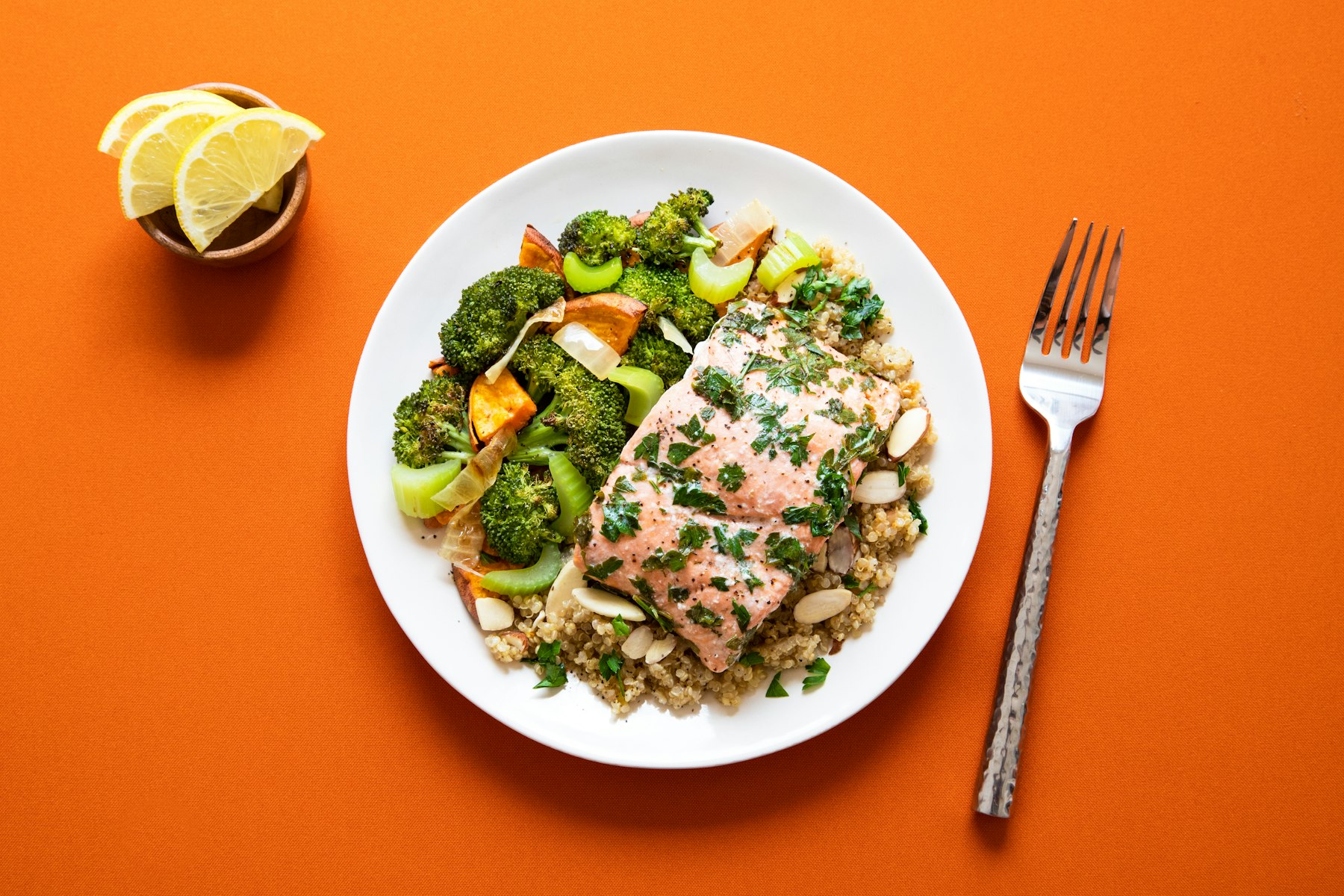
A day that reaches about 110 grams might look like this: Greek yogurt with berries and a handful of almonds at breakfast (about 25 grams); a lentil and chicken salad at lunch (about 35 grams); cottage cheese with fruit in the afternoon (about 15 grams); and salmon with vegetables and quinoa at dinner (about 35 grams).
Timing, training and supplements
Total daily intake matters most. Eating a protein-rich meal within a few hours before or after a strength session is sensible and easy, but there is no need to race to drink a shake the moment you finish.
Protein powders are a convenience, not a requirement. They can help on busy days or when appetite is low. Because dietary supplements are not approved for safety and effectiveness before they are sold, choose products tested by an independent third-party program such as NSF Certified for Sport or Informed Sport.
Keep expectations realistic. In the same British Journal of Sports Medicine meta-analysis, adding protein supplements to strength training produced modest extra gains—on average about 2.5 kilograms on a one-repetition maximum and 0.3 kilograms of lean mass. As Harvard Health notes, it is protein combined with consistent resistance exercise that leads to the greatest improvements in muscle mass and strength. If you are building your program, our guide to learning to lift later in life is a good companion to this one.
Who should check with a professional first
For healthy adults, intakes in the ranges above are widely considered safe. Harvard Health notes, however, that excess protein can aggravate kidney problems in people with existing kidney disease or a history of kidney stones. Talk with your doctor or a registered dietitian before increasing protein if you have chronic kidney disease, diabetes with kidney involvement, liver disease, or if you follow a medically prescribed diet. A dietitian can also help if you eat a mostly plant-based diet and want to plan your protein sources carefully.
YOUR PROTEIN PLAN
Three quick calculations
- My weight in kilograms (pounds ÷ 2.2): ___
- Daily target (weight × 1.2 to 1.6): ___ to ___ grams
- Per-meal target (weight × 0.4): ___ grams · The meal I will improve first: ___
SOURCES AND FURTHER READING
Harvard Health Publishing · Muscle loss and protein needs in older adults
This article is for general information and is not a substitute for personal medical or nutrition advice.
Are you a fitness or wellness professional with a member journey to share?