


FITNESS FOR THE WEEKEND · STATURE READER GUIDE
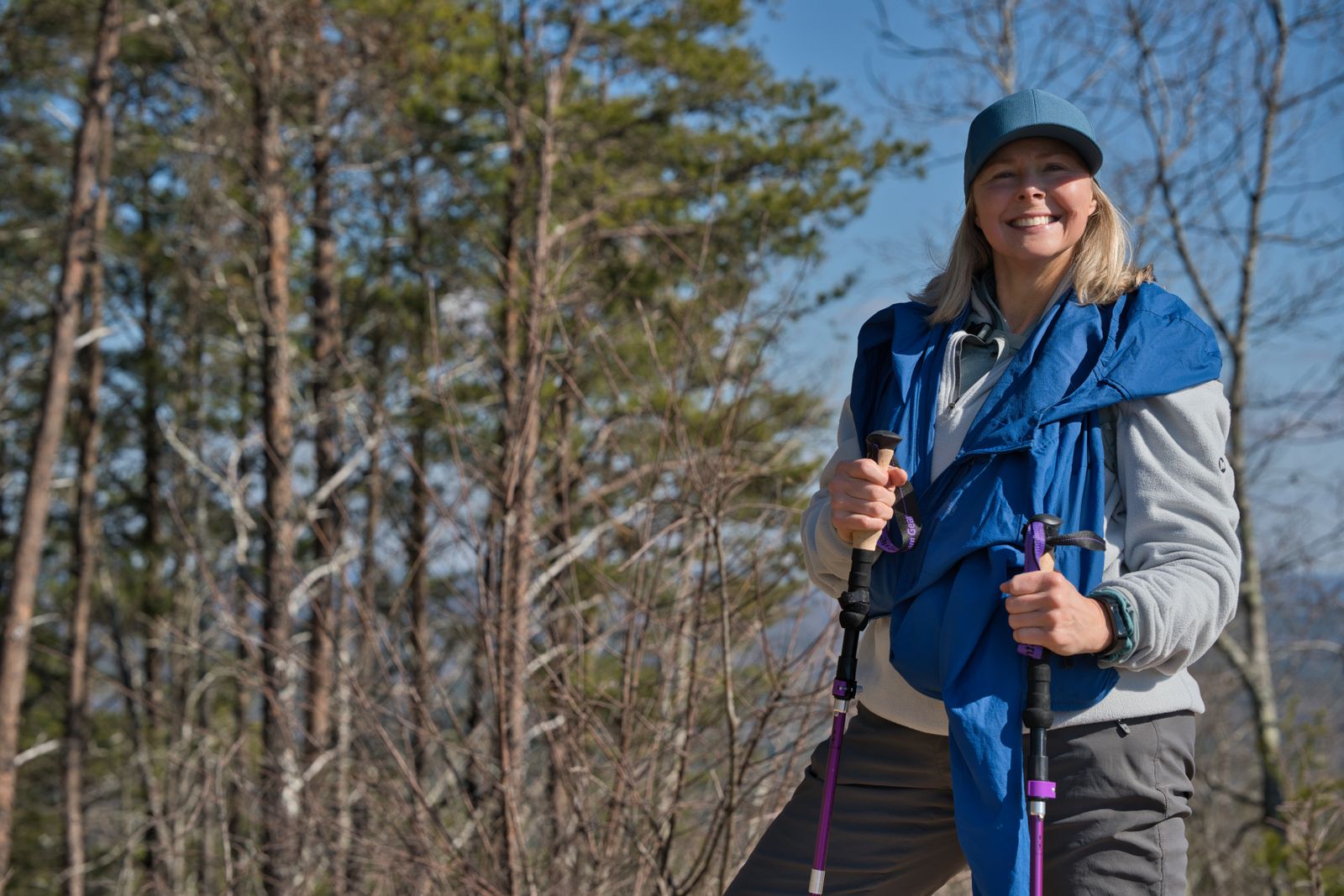
A weekend hike starts long before the trailhead. It begins with the route you choose and the question you bring to training: what would help me feel prepared to enjoy this day?
For adults in their 50s, that question can be more motivating than an abstract fitness target. A trail supplies a destination, but it also supplies details. Distance alone does not describe the experience. Hills, surfaces, time on your feet and what you carry all belong in the conversation.
This guide focuses on the gym side of that preparation: which exercises carry over to the trail, why descents deserve their own training and how to build up time on your feet and the weight on your back. For choosing the route itself and planning the day, see our companion piece on building confidence on the trail.
Bring the route to your coach
Show your trainer the official trail description rather than simply asking for a hiking workout. Explain whether you walk regularly now, what outdoor experience you have and which part of the outing concerns you.
Ask how the preparation connects to that particular goal. You should understand the purpose of the activities selected and how the plan will be adjusted as you go. A generic hard session does not answer whether a specific day outside is a sensible choice.
Keep a realistic alternative in mind. Choosing a shorter route can preserve the reason you wanted to go: time outdoors, a shared experience or the pleasure of exploring somewhere new.
Connect the gym with time on your feet
Strength work and walking are different parts of the preparation conversation. The CDC’s adult activity guidance includes both aerobic activity and muscle-strengthening work for all major muscle groups. One busy gym appointment should not become the only information you use to judge readiness for a day outside.
Make notes about the walks you already take: the route, approximate time, stops and how the experience felt. Bring those observations to your coach. A concrete account gives them more to work with than either “I am fit” or “I am out of shape.”
Discuss the return journey as well. Reaching a viewpoint is only part of an out-and-back trip. The plan needs to make sense for the whole outing, including the point at which you would choose to turn around.
Gym exercises that carry over to the trail
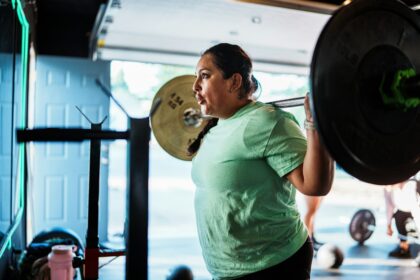
Hiking asks specific muscles to do specific jobs. Harvard Health Publishing explains that climbing relies on the calves, the hamstrings and the gluteal muscles, with the core helping you stay stable. Going downhill uses the same muscles but adds the quadriceps at the front of the thighs, which act as brakes. Its suggested exercises include stair climbing, lunges, squats and sit-to-stands.
The table below builds on that list. It is an editorial menu to discuss with your coach, who can choose the versions, loads and order that suit you.
| Exercise | What it rehearses on the trail | Cue to remember |
|---|---|---|
| Step-ups onto a box or stair | Rock steps, stairs and short steep pitches, one leg at a time | Place the whole foot on the step, stand tall, then lower yourself slowly |
| Split squats or lunges | Long or uneven strides and stepping over roots | Keep your weight over the front foot and move without rushing |
| Squats or sit-to-stands | General leg strength for climbs and for getting up after a rest stop | Stand without pushing off with your hands; sit down with control |
| Calf raises | Pushing off on climbs and steadying the ankles on uneven ground | Rise fully, pause briefly at the top, lower slowly |
| Hip hinge, such as a kettlebell deadlift | Leaning into a climb and lifting a loaded pack from the ground | Push the hips back and keep a long, neutral spine |
| Loaded carries with dumbbells or kettlebells | Walking upright for long periods while carrying weight | Tall posture, steady steps, relaxed breathing |
| Single-leg balance practice | Footing on loose stones, roots and narrow sections | Stand near support and progress only when steady |
If you want a starting point for that last row, our guide to the one-leg balance test explains how to check yourself safely. Harvard Health’s advice is to pair regular walking with two strength sessions a week, increasing both walking time and the weight you lift gradually.
Training for the downhill
Many hikers prepare for the climb and are surprised by the descent. The reason lies in the type of muscle work involved. A 2019 review in Frontiers in Physiology describes an eccentric contraction as one in which a muscle lengthens while it is still working, braking against a force greater than the one it is producing. Downhill running and walking down stairs are classic examples, because both emphasize eccentric work by the muscles at the front of the thigh.
The review notes that eccentric contractions use less oxygen and energy for a given force than concentric, or shortening, contractions. That helps explain why a long descent can feel easy on your breathing yet leave your thighs sore. Unaccustomed eccentric exercise is known to cause muscle damage and delayed-onset soreness, which typically peaks between 24 and 72 hours afterward and fades within five to seven days.
There is good news in the same research. A first bout of eccentric exercise offers protection against damage from a later bout of similar exercise, with less soreness and swelling and a faster recovery. Researchers call this the repeated bout effect. In practical terms:
- Slow the lowering. On step-ups, squats and lunges, take your time on the way down rather than dropping.
- Add step-downs. Start from a low step, lowering one heel to the floor with control while holding a rail if needed.
- Practice real descents early. Walk down stairs or a local hill in modest amounts weeks before the trip, so the first big descent is not on the day itself.
- Respect the timing. Because soreness can peak a day or more later, avoid a new, steep downhill session in the few days before your hike.
Knee or joint pain is different from ordinary muscle soreness. If descending causes pain, tell your coach and seek clinical advice if it persists.
Building pack weight and time on your feet gradually
Gym strength helps, but the trail also asks for hours of continuous walking, often with a bag on your back. Harvard Health suggests choosing early hikes that are shorter than your usual walking distance, because uneven terrain is more demanding. The same logic applies to building up. A sequence like the following, agreed with your coach, keeps each step manageable:
- Establish your baseline. Note your longest comfortable walk and how your legs and feet felt the next day.
- Change one thing at a time. Lengthen the walk, add hills or add load, but not all three in the same week.
- Introduce the pack lightly. Start with a bag carrying little more than water, then add weight in small steps toward what you expect to carry.
- Take the pack onto hills and stairs. Climbing and descending with weight is the closest rehearsal for the trail.
- Plan a rehearsal walk. A week or two before the hike, try a walk close to the expected time on your feet, then use how you felt to finalize the plan.
Loaded carries and step-ups in the gym support this progression, but they do not replace it. Hours on varied ground train your feet, your pacing and your patience in ways a short gym session cannot.
Rehearse the practical details
Use an ordinary local walk to find out whether your shoes, clothing and bag work together. Learn where your water and route information will be kept. A familiar piece of equipment is one fewer thing to figure out when the surroundings are new.
The National Park Service’s Hike Smart guidance emphasizes choosing a route suited to your abilities and checking current conditions. Fitness preparation cannot substitute for those decisions. A successful training week does not make heat, closures or a difficult trail irrelevant.
Agree on expectations with anyone joining you. Explain the kind of day you want and the pace you are comfortable discussing. It is easier to make those decisions before the group has started walking.
TAKE THIS TO YOUR NEXT SESSION
The trail is the brief
Bring the official route description and your recent walking experience.
Name the part of the outing you most want help preparing for, including the descent.
Ask how you and your coach will review readiness before the trip.
This article is for general information and is not a substitute for personal medical advice.
Are you a fitness or wellness professional with a member journey to share?