



BELLY FAT · HEALTHY AGING
Many people notice their waistline changing in midlife even when the scale barely moves. Some of that change may be visceral fat, the kind stored deep inside the abdomen.
Visceral fat is not the soft layer you can pinch. It sits behind the abdominal muscles, wrapped around your organs, and it is closely tied to heart and metabolic health. The encouraging news is that it tends to respond well to regular exercise, better sleep and sensible eating. This guide explains what visceral fat is, why it matters, how to estimate it at home with a tape measure and which habits help shrink it.
What visceral fat is
Your body stores fat in two main places. Subcutaneous fat lies just under the skin. Visceral fat, as Cleveland Clinic describes it, sits deeper, lining the abdominal walls and surrounding organs such as the heart, kidneys, liver and pancreas. It is sometimes called active fat because it takes part in how the body functions.
Some visceral fat is normal and even protective. Cleveland Clinic suggests that a healthy amount is about 10 percent of your total body fat. Problems arise when it accumulates beyond that, and because it is hidden, you cannot judge it by appearance alone. Two people with the same weight can carry very different amounts.
Why visceral fat matters for your health
Research links excess visceral fat to a higher risk of cardiovascular disease, and Cleveland Clinic notes associations with diabetes, high cholesterol and atherosclerosis. Mayo Clinic goes further, listing conditions whose risk rises with a large amount of belly fat regardless of overall weight:
- High blood pressure and unhealthy blood fat levels
- Heart disease and stroke
- High blood sugar and type 2 diabetes
- Fatty liver and sleep apnea
- Certain cancers and early death from any cause
The phrase regardless of overall weight is the important part. A normal reading on the bathroom scale does not rule out a high level of visceral fat, which is why waist measurements belong in any health check you do at home.
Why it tends to build up in midlife
Several forces converge in your 40s and 50s. Mayo Clinic explains that muscle mass declines with age, which slows the rate at which you burn calories, and the effect is larger in people who are not physically active. For women, body fat tends to shift toward the abdomen after menopause, likely because lower estrogen levels affect where fat is stored. Many women gain belly fat even without gaining overall weight. Genes also influence both how much fat you carry and where it goes.
Daily habits add to the picture. Cleveland Clinic points to the stress hormone cortisol, which promotes visceral fat storage, and to insufficient sleep, which can encourage visceral fat or make it harder to lose. Taking in more energy than you use, especially from sugary and fatty foods, contributes as well.
How to estimate visceral fat at home
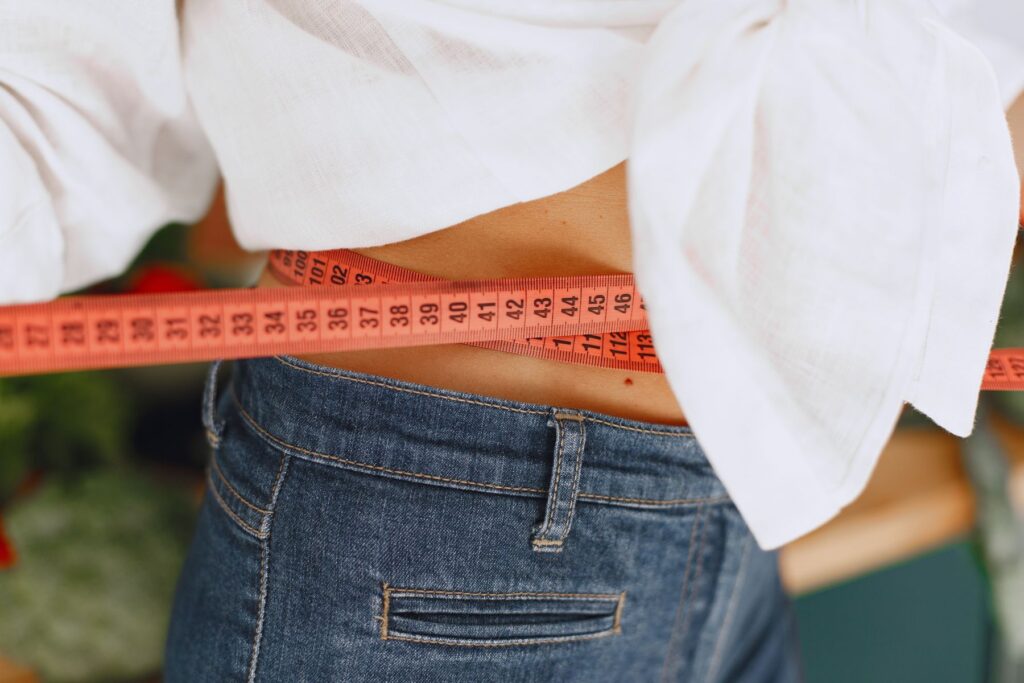
Measuring visceral fat directly requires imaging such as a CT or MRI scan, but a tape measure gives a useful estimate. Mayo Clinic recommends this method: stand and wrap the tape around your bare abdomen just above your hipbone, keep it level and snug without pressing into the skin, relax, breathe out and measure. Do not suck in your stomach.
| Measure | Women | Men |
|---|---|---|
| Waist circumference linked to higher risk | 35 inches or more | 40 inches or more |
| Waist-to-hip ratio suggesting abdominal obesity | Above 0.85 | Above 0.90 |
| Waist-to-height target | Waist no more than half your height | Waist no more than half your height |
These thresholds come from Cleveland Clinic. To find your waist-to-hip ratio, divide your waist measurement by your hip measurement taken at the widest point. Treat the numbers as screening tools rather than a diagnosis, and look at the trend over months rather than any single reading. Our guide to losing fat without losing muscle explains how waist measurements fit alongside other signs of progress.
Exercise that shrinks visceral fat
Visceral fat appears to respond to exercise even when the scale changes little. A meta-analysis in PLOS ONE pooled 15 studies with 852 participants who exercised without dieting and found a clear reduction in visceral fat measured by CT or MRI. Programs of moderate and high intensity worked, while low-intensity programs did not show a significant effect. The authors reported reductions of more than 30 square centimeters in women and more than 40 in men in aerobic programs as short as 12 weeks, and in some of the studies body weight barely changed. Strength training also showed an effect, though it rested on very few studies.
In practice, that points toward a week that includes both. Mayo Clinic recommends at least 150 minutes of moderate aerobic activity, such as brisk walking, or 75 minutes of vigorous activity, such as jogging, plus strength training at least twice a week, and notes some evidence that interval training and strength training can help reduce belly fat. Cleveland Clinic frames a similar target as at least 30 minutes a day, five days a week. Our article on combining cardio and strength training shows how to fit both into the same week.
- Make most aerobic sessions moderate or harder. You should be breathing faster and able to talk, but not sing.
- Lift twice a week. Keeping muscle helps protect the calorie burn that age tends to erode.
- Skip the crunch marathon. Mayo Clinic notes that abdominal exercises strengthen the muscles but will not, on their own, remove belly fat.
- Give it time. Cleveland Clinic says visceral fat is easier to lose than subcutaneous fat and that changes may show within two to three months of consistent effort.
Sleep, stress and food also shape visceral fat
A small but striking study from Mayo Clinic, published in 2022 in the Journal of the American College of Cardiology, showed how quickly short sleep can matter. Twelve healthy, lean adults spent two weeks limited to four hours of sleep a night and, in a separate period, a normal nine hours in bed. When short on sleep, they ate more than 300 extra calories a day. Their weight rose by only about a pound, yet total abdominal fat increased by 9 percent and visceral fat by 11 percent compared with normal sleep. Catch-up sleep afterward reduced calorie intake, but visceral fat continued to rise.
The volunteers were young and few, so the findings need confirming in larger groups. Still, they echo the advice to protect your sleep, which our guide to sleep and muscle recovery covers in more depth. Stress management deserves the same attention, given the role of cortisol.
On the plate, Mayo Clinic recommends emphasizing fruits, vegetables and whole grains, choosing lean proteins such as fish and low-fat dairy, and limiting processed meats and saturated fat. Moderate amounts of the fats found in fish, nuts and certain vegetable oils fit well. Swapping sugary drinks for water or other unsweetened beverages is one of the simplest changes. Cleveland Clinic cites the Mediterranean and DASH eating patterns as examples and suggests limiting alcohol, which adds empty calories and can strain the liver.
Before starting a new exercise program, talk with your doctor if you have heart disease, diabetes, kidney disease or new symptoms such as chest pain or unusual breathlessness. A large or rapidly growing waist is also worth raising at your next checkup, since your clinician can check blood pressure, blood sugar and cholesterol.
A MONTHLY CHECK-IN
Track your waist, not just your weight
- Measure your waist just above the hipbone on the first morning of each month, after breathing out.
- Divide your waist by your height and note whether the result is 0.5 or below.
- Count your moderate-or-harder aerobic minutes for the past week and aim for at least 150.
- Check that two strength sessions made it onto your calendar.
- Pick one sleep habit to protect this month, such as a fixed wake-up time.
This article is for general information and is not a substitute for personal medical advice.
Are you a fitness or wellness professional with a member journey to share?