

THE OUTDOOR LIFE · STATURE READER GUIDE
The most memorable part of a hike may be the view, the conversation or the hour spent away from a screen. None of those requires choosing the hardest route available.
When you are returning to the trail after 50, it helps to distinguish confidence from pressure. Confidence can come from knowing the route, understanding your options and walking with people who share your expectations. Pressure often begins when the destination becomes more important than the experience.
This guide covers choosing the outing, agreeing on a pace, what to pack, what to wear on your feet, how trekking poles fit in and how to read the weather and the ground once you are walking.
Choose the day before choosing the distance
Decide what kind of outing you want: a short walk with time to stop, a longer excursion or a familiar route with a friend. That choice gives the planning a purpose.
The National Park Service advises picking a trail that everyone in the group can complete and enjoy safely. Its guidance also emphasizes checking the weather and current park alerts for closures, wildland fire risk and other hazards. A route that was appropriate on a previous visit may not be appropriate under different conditions.
Use the official park or land-manager information when it is available. If the description leaves you uncertain, ask staff for clarification about the terrain and current conditions.
Talk about pace before the trailhead
Explain what would make the outing enjoyable for you. Discuss breaks, the return journey and how the group will make decisions if someone wants to stop.
A walking partner who shares those expectations can make the day easier to plan. You should not have to invent an excuse at the trailhead for preferring a shorter route.
The National Park Service recommends keeping a group together and allowing the slowest hiker to set the pace. Treat that as a planning conversation, not a judgment about who deserves to be there.
Pack the Ten Essentials, even for a short hike
The National Park Service describes the Ten Essentials as items that can help you or others in the event of minor injuries, sudden weather changes or unexpected emergencies, and its Hike Smart page calls them the minimum everyone should carry. On a day hike, most of them fit in a small pack.
| Essential | What the NPS lists | A light day-hike version |
|---|---|---|
| Navigation | Map, compass and GPS system | A printed trail map, plus the route downloaded to your phone |
| Sun protection | Sunglasses, sunscreen and hat | A brimmed hat and sunscreen applied before you set off |
| Extra clothing | Jacket, hat, gloves, rain shell and other layers | A light warm layer and a rain shell, even on a clear morning |
| Illumination | Flashlight and headlamp | A small headlamp in case the return leg runs late |
| First-aid supplies | A first-aid kit suited to the trip and your own medical needs | Blister care, bandages and any personal medicines |
| Fire | Matches or lighter and fire starters | A lighter in a sealed bag, for emergencies and only where fire is allowed |
| Repair kit and tools | Duct tape, knife, multi-tool and scissors | A compact multi-tool and a little tape wrapped around a bottle |
| Nutrition | Extra food | No-cook snacks beyond what you plan to eat |
| Hydration | Water and water treatment supplies | More water than you expect to drink, especially in warm weather |
| Emergency shelter | Tent, space blanket, tarp or bivy | A lightweight emergency blanket or bivy |
The NPS notes that some activities call for more gear and suggests checking the specific park’s website while you plan. Pack the bag the night before so the morning is about the walk, not a search for a headlamp.
Footwear and trekking poles that suit the trail
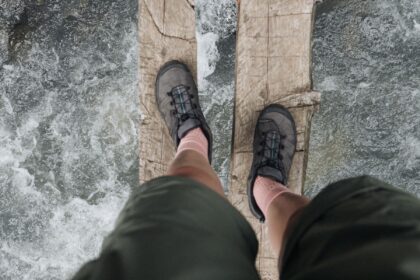
Match your shoes to the surface. The NPS Hike Smart page suggests sturdy, rubber-soled hiking boots with ankle support for dirt and gravel trails, and tennis shoes for paved, urban paths. Whatever you choose, wear it on a few shorter walks first, so new footwear does not meet its first long day on the trail.
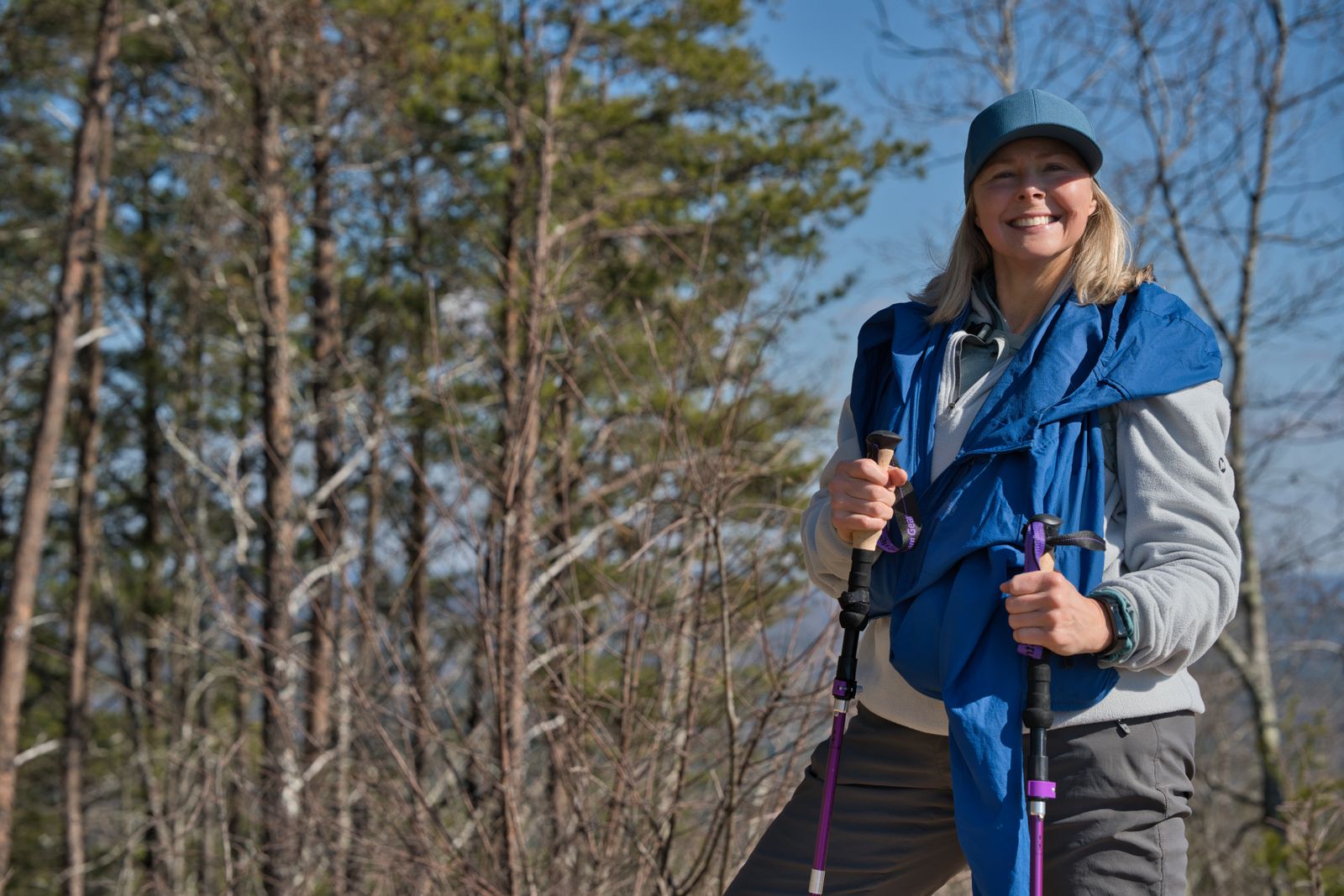
Trekking poles can help, though they are not automatically the right choice. A 2021 recommendation from the medical commission of the UIAA, the international climbing and mountaineering federation, says hiking sticks reduce forces in the joints of the legs, particularly when walking downhill, and may help with balance on unstable ground. It recommends adjustable sticks, especially for descents, for older hikers, people carrying excess body weight or heavy packs, and those with joint or spine problems.
The same document lists drawbacks. Long-term use may reduce balance and coordination, sticks can contribute to stumbles on narrow ridges where they cannot be planted, and the UIAA says that for safety reasons they should not be used everywhere. A reasonable approach is to carry a pair, use them on descents and loose ground, and fix them to your pack when you need your hands for a scramble or a narrow path.
Make turning around part of the plan
An out-and-back route has a return leg even when the outward journey feels easy. Agree in advance on a turnaround point or time and consider how you will respond if the outing takes longer than expected. The NPS is direct about this: set a turnaround time and make sure you stick to it.
Carry the navigation and supplies appropriate to the route, and tell someone who is not joining you where you plan to go and when you expect to return. Do not assume a phone will have service.
Planning an alternative outing can also preserve the day. A closure or an unfavorable forecast does not require abandoning time together; it requires changing the activity.
Read the weather and the ground as you go
The forecast you checked at home is only the first look at conditions. Thunderstorms deserve particular respect. The National Weather Service states that there is no place outside that is safe from lightning and advises getting an updated forecast before heading out. In its Colorado lightning safety guidance, it notes that mountain thunderstorms typically develop after 11 a.m. and suggests planning to be coming down by late morning. Once you reach a safe shelter, it recommends staying there for 30 minutes after the last rumble of thunder.
Daylight is the other clock. The NPS advises keeping track of when you set out and turning around in time so you are not caught outside in the dark. Ground conditions matter too: a slope that felt manageable on the way out can feel different on tired legs, especially on loose descents. Consider turning back when you notice any of these signals:
- Clouds building quickly, thunder in the distance or a sudden shift in the wind.
- The agreed turnaround time arrives, even if the destination feels close.
- The trail becomes steeper, looser or wetter than the description suggested.
- Someone in the group is unusually tired, cold, overheated, unsteady or low on water.
- At your current pace, the remaining daylight will not cover the return leg.
Turning back on any of these is good judgment, not a lost day. Feeling Steadier on Stairs and Uneven Ground looks at the steadiness side of rough terrain, and if you want to prepare your legs for longer climbs and descents, Training for Weekend Hikes: Bringing the Trail Into the Gym covers the training.
Keep a record of the experience you enjoyed
Afterward, note more than mileage. Was the surface comfortable? Did you like the pace? Was there enough time to pause? Did the equipment you brought work as expected, and did the poles help or get in the way?
Those observations help you choose the next trip and give a trainer useful context if you are preparing for more demanding outings. They also help you recognize what you actually value about being outdoors.
The next hike does not have to be longer to be worthwhile. Repeating a route you enjoy can be a deliberate choice. A well-planned day that leaves you interested in going again is a meaningful place to begin.
LEAVE A TRIP PLAN
Before you leave, tell someone at home
Which trail, trailhead and parking area will you use?
Who is going, and when do you expect to be back?
What should they do if they have not heard from you by then?
This article is for general information and is not a substitute for personal medical advice.
Are you a fitness or wellness professional with a member journey to share?