


ALCOHOL AND RECOVERY · RECOVERY AND HABITS
A cold beer after a long hike or a glass of wine with dinner on a training day is a familiar pleasure. The useful question is not whether it is allowed, but how much it costs your recovery, and how to keep that cost small.
The research on alcohol and workout recovery is more nuanced than either the “a beer is a recovery drink” crowd or the strict teetotalers suggest. Dose matters enormously, timing matters, and sleep is one channel through which even moderate drinking can affect how you feel the next day. This guide walks through what happens to muscle repair, sleep and hydration, how big a “drink” really is, and a set of practical habits for people who train and also enjoy a drink.
Why the question matters when you train
Training is a stimulus; recovery is where the benefit is built. After a strength session or a hard ride, your body repairs muscle fibers, restocks energy stores and adapts so that the same effort feels easier next time. Anything that interferes with sleep, nutrition or repair can blunt that process, even if the workout itself went well.
Federal advice on drinking has also shifted. The 2025–2030 Dietary Guidelines for Americans dropped the familiar numeric daily limits of two drinks for men and one for women and now simply advise people to “consume less alcohol for better overall health.” The guidelines add that some people should avoid alcohol entirely, including those who are pregnant, those recovering from alcohol use disorder or unable to control their drinking, and those taking medications or managing conditions that interact with alcohol.
Alcohol and workout recovery: what happens to muscle repair
A widely cited study on the subject comes from a team led by Evelyn Parr and published in PLoS ONE in 2014. Eight physically active men completed a demanding session of heavy leg extensions followed by steady and interval cycling, then drank either protein alone or alcohol mixed with protein or carbohydrate. The alcohol dose was large, 1.5 grams per kilogram of body weight, which the researchers equated to roughly 12 standard drinks.
Compared with protein alone, muscle protein synthesis fell by 24 percent when alcohol was taken with protein and by 37 percent when it was taken with carbohydrate. The authors concluded that alcohol suppresses the muscle-building response to exercise and may impair recovery and adaptation to training, even when protein is consumed.
Two cautions keep this in proportion. The study involved a small group of physically active men and a binge-level dose, so it tells us little about one glass of wine. And the finding that protein softened the effect is itself useful: if you do drink after training, eating a protein-rich meal first is a sensible habit. Stature™’s guide to how much protein you need covers the daily targets.
Alcohol and sleep: the hidden recovery cost
Many people feel that a drink helps them fall asleep, and in a narrow sense it does. A 2013 review in Alcoholism: Clinical and Experimental Research, with sleep specialist Irshaad Ebrahim as corresponding author, gathered the available research on drinking and nighttime sleep. As Sleep Review reported, alcohol shortened the time it took to fall asleep at all doses and increased deep sleep in the first half of the night.
The trade-off came later. The review found more sleep disruption in the second half of the night, a delay in the first REM period at all doses, and a reduction in total REM sleep at moderate and higher doses in most studies. For someone who trains, that pattern can mean waking more often, feeling less rested and starting the next session a little flat. Since sleep is where so much repair happens, as our guide to sleep and muscle recovery explains, protecting it is one of the easiest wins available.
Timing helps. Finishing your last drink well before bed, and keeping the amount small, gives your body more time to process the alcohol before you turn in.
Hydration, next-day performance and the dose question
Alcohol is often described as dehydrating. The picture is again dose dependent: a US Masters Swimming review of the research notes that a 2010 study in Alcohol and Alcoholism found alcohol’s diuretic effect impaired rehydration only at very high levels of consumption. The same article describes a 2014 Sports Medicine review by Barnes that found no compelling evidence that moderate drinking harms next-day performance when intake really is moderate. Heavy drinking is another matter, with well-documented long-term harms.
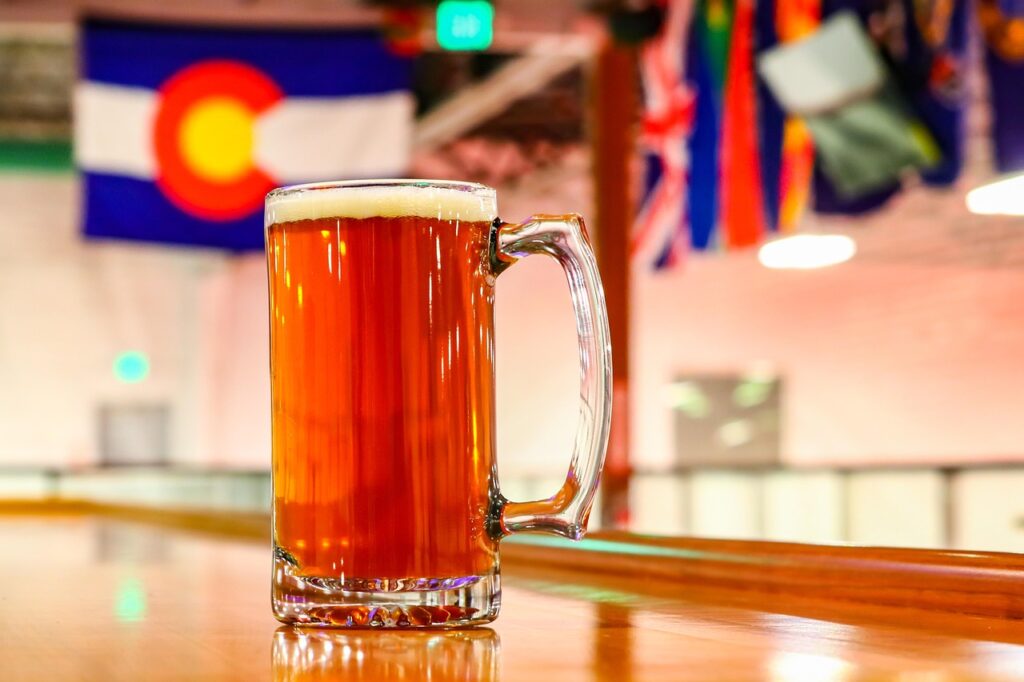
“Moderate” only means something if you know what counts as a drink. According to the National Institute on Alcohol Abuse and Alcoholism, a US standard drink contains 14 grams, or about 0.6 fluid ounces, of pure alcohol.
| Beverage | One standard drink | Typical alcohol by volume |
|---|---|---|
| Regular beer | 12 fl oz | About 5% |
| Malt beverage or hard seltzer | 8 to 10 fl oz | About 7% |
| Table wine | 5 fl oz | About 12% |
| Distilled spirits | 1.5 fl oz | About 40% |
Real-world servings often exceed these amounts. NIAAA points out that a 12-ounce craft beer at 10 percent alcohol counts as two standard drinks, and that standard drink amounts often do not match typical serving sizes.
Practical habits that protect your training
You do not need a perfect record to train well. A few consistent habits keep the effect of an occasional drink small.
- Refuel first. After a workout, eat a meal with protein and carbohydrate before any alcohol, and drink water to replace what you lost in sweat.
- Keep it to one or two. The clearest recovery effects in the research come from heavy doses. Fewer drinks means less interference.
- Alternate with water. A glass of water between drinks slows your pace and supports hydration. Our guide to how much water to drink around exercise has the details.
- Mind the clock. Finish your last drink well before bed to protect the second half of your night.
- Plan around key sessions. Skip alcohol the night before a long ride, a heavy lifting day or an event you care about.
- Try alcohol-free options. Non-alcoholic beers and sparkling water with citrus can fill the social role of a drink without the recovery cost.
- Notice the pattern. Jot down how you sleep and train after drinking days. Your own data is often more persuasive than any study.
The bigger health picture
Recovery is only one part of the story. The US Surgeon General’s advisory on alcohol and cancer risk lists at least seven cancers linked to alcohol: breast cancer in women, colorectal, esophageal, laryngeal, liver, mouth and throat cancers. That broader context is one reason federal guidance now encourages drinking less rather than setting a daily allowance.
None of this calls for alarm about a single glass at a celebration. It does suggest that if you are already investing time in training, sleep and good food, trimming how often and how much you drink is a habit that pays off in more than one way. If you take medications, have liver disease, heart disease or diabetes, are pregnant, or find it hard to cut back, talk with your doctor; free tools such as NIAAA’s Rethinking Drinking resource can also help you take stock.
BEFORE YOUR NEXT DRINK
A training-day drinking checklist
- Have I eaten a proper post-workout meal with protein?
- Do I know how many standard drinks are in what I am pouring?
- Is there a glass of water beside it?
- Will I finish well before bedtime?
- Is tomorrow a key training day that deserves a clear head and a full night’s sleep?
This article is for general information and is not a substitute for personal medical advice.
Are you a fitness or wellness professional with a member journey to share?