



EQUIPMENT CHOICES · STRENGTH AFTER 40
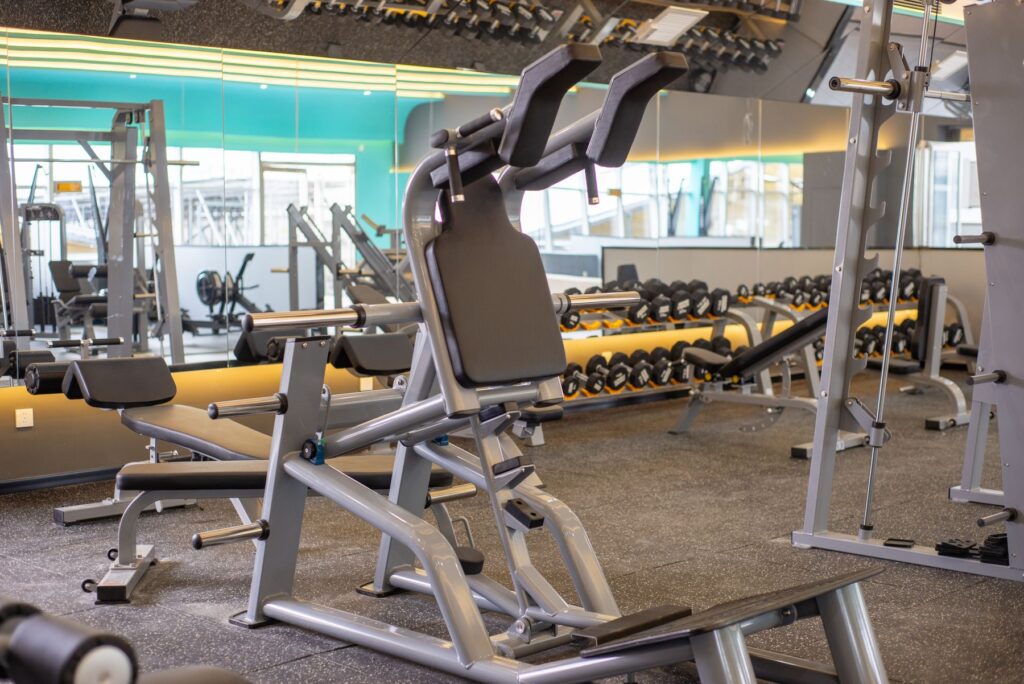
You walk into the gym and face two worlds: rows of padded machines on one side, racks of dumbbells and barbells on the other, and no sign telling you which one is right for you.
The debate over free weights vs. machines can make strength training sound more complicated than it is. The reassuring news from recent research is that both build strength and muscle well. This guide explains what the studies show, what each tool does best, how to set a machine up so it fits your body, and how to combine the two in a simple, effective week.
What the research says about free weights vs. machines
A 2023 systematic review and meta-analysis by Haugen and colleagues in BMC Sports Science, Medicine and Rehabilitation compared the two approaches across 13 studies with 1,016 adult participants who trained for at least six weeks. When the researchers directly compared the groups, they found no differences in strength, jump performance or muscle growth.
One pattern did stand out: strength gains were specific to the equipment. People who trained with free weights improved more when they were tested on free weights, and machine users showed a trend toward better results on machine tests. In other words, you get best at what you practice. The authors concluded that the choice between the two comes down to individual preferences and goals.
The American College of Sports Medicine reached a similar conclusion in its 2026 position stand on resistance training, published in Medicine & Science in Sports & Exercise. Its review found that the type of equipment, machines or free weights, did not consistently change outcomes, and that bands, bodyweight and home routines also deliver marked benefits. The central message is that moving from no resistance training to any form of it matters most.
What machines do well
Machines guide the weight along a fixed path, which takes balance out of the equation and lets you concentrate on pushing or pulling with the target muscles. That makes them a friendly starting point if you are new to lifting, returning after a long break or working around a sore joint, because you can learn the effort of a lift before mastering its coordination.
They are also practical. Changing the load usually means moving a pin, so you can adjust quickly between sets. Most machines let you train hard without a spotter, and many isolate a single muscle group, such as the hamstrings on a leg curl or the upper back on a seated row. That focus helps when you want to bring up a weak link without tiring everything else.
The catch is fit. Mayo Clinic notes that machines can be effective as long as they adjust to your body dimensions and allow a full range of motion at your joints. A machine built around someone much taller or shorter than you can pull your joints out of a comfortable line, which is a good reason to take setup seriously.
What free weights do well
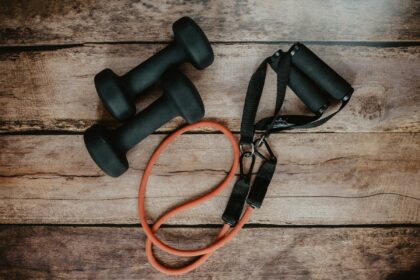
Dumbbells, kettlebells and barbells are versatile and inexpensive, and Mayo Clinic points out that they simulate real-life lifting situations and promote whole-body stabilization. Carrying groceries up a flight of stairs, lifting a suitcase into an overhead bin or picking a toddler up off the floor all ask you to control a load through space, and that is exactly what free weights train.
A single set of adjustable dumbbells also covers a remarkable range of exercises: squats, lunges, presses, rows, hinges and carries. That is why free weights form the backbone of most home gyms. The trade-off is a steeper learning curve. Technique matters more when nothing guides the path, so start lighter than you think you need and consider a session or two with a qualified coach.
Mayo Clinic’s bottom line applies to both: proper technique is more important than the specific type of equipment. A well-performed machine row beats a sloppy barbell row every time, and the reverse is true as well.
Matching the tool to your goal
Because the overall results are similar, the better question is which tool suits your situation right now. Use this table as a starting point rather than a rulebook.
| Your goal | Machines | Free weights | A sensible approach |
|---|---|---|---|
| Learning to lift with confidence | Fixed path makes effort easy to learn | More coordination needed at first | Start with machines, then add simple dumbbell moves |
| Everyday strength for carrying and lifting | Builds the working muscles | Also trains balance and control | Lean toward free weights |
| Building muscle size | Effective and easy to isolate | Effective | Use both; total weekly sets matter more |
| Training around a sore joint | Controlled path and adjustable range | Works with lighter loads and careful form | Machines first, ideally with professional guidance |
| Training at home | Limited by space and cost | Compact and affordable | Dumbbells, bands and bodyweight |
| Lifting heavy without a partner | Most need no spotter | Some lifts call for a spotter | Save the heaviest sets for machines |
If you are unsure, the research gives you permission to choose the option you will actually stick with. Mayo Clinic’s advice is to pick a system you enjoy that fits your lifestyle, and if you are weighing memberships, our guide to choosing a gym covers what to look for in equipment and staff support.
Setting up a machine so it fits you
A minute of setup makes a machine safer and more effective. Most have a placard that shows the starting position and the muscles worked; read it, then run through these checks before your first rep.
- Line up the joint that moves with the machine’s pivot point, often marked with a colored dot. On a leg extension that is your knee; on a chest press, your shoulder.
- Adjust the seat so handles or pads meet you in the middle of your range, not at the far edge of it.
- Set the range-of-motion stop so you can move comfortably without pain or pinching.
- Begin with a light practice set, then add load once the path feels smooth.
- Move with control in both directions, and do not let the weight stack crash between reps.
If something still feels awkward after adjusting, skip that machine and choose a free-weight or cable alternative that works the same muscles. There is always another way to train a movement.
A sample week that uses both
The ACSM recommends training all major muscle groups at least twice a week. For strength, it suggests two to three sets per exercise, with heavier loads around 80% of your one-repetition maximum once you have a solid foundation; for muscle growth, it points to higher weekly volume, about 10 sets per muscle group. It also found that training to failure did not consistently change outcomes for the average healthy adult, so you can end each set with a rep or two left in reserve.
| Movement | Session A | Session B |
|---|---|---|
| Squat | Leg press (machine) | Goblet squat (dumbbell) |
| Push | Dumbbell bench press | Machine chest press or shoulder press |
| Pull | Seated cable row (machine) | One-arm dumbbell row |
| Hinge | Dumbbell Romanian deadlift | Leg curl or back extension (machine) |
| Carry | Farmer’s carry (two dumbbells) | Suitcase carry (one dumbbell) |
Do Session A and Session B on days that are not back to back, with two to three sets of each exercise. To keep moving forward, use the guidance in our article on choosing sets and reps, and add weight or reps in small steps as you get stronger.
If you have heart disease, high blood pressure that is not well controlled, diabetes, kidney disease, a recent injury or surgery, or new symptoms such as chest pain or dizziness during effort, talk with your doctor before starting or intensifying a strength program. The same applies if you are pregnant. A physical therapist can also help you choose equipment that suits a joint you are protecting.
GYM CHECKLIST
Your next session: a five-point equipment check
- Choose one machine and one free-weight option for each major movement.
- Adjust every machine before your first set: seat, pivot point and range.
- Warm up with a set at about half your working weight.
- Stop each working set when you have one or two good reps left.
- Record the weight and reps so you can add a little next time.
SOURCES AND FURTHER READING
Mayo Clinic Care Network · Free weights or machines: Which are better?
This article is for general information and is not a substitute for personal medical advice.
Are you a fitness or wellness professional with a member journey to share?