




HEART HEALTH · HEALTHY AGING
Maybe your last reading crept into a higher category, or your doctor suggested lifestyle changes before medication. Either way, the type of exercise you choose matters more than you might expect.
Regular physical activity is one of the most dependable tools for keeping blood pressure in a healthy range, and it works alongside medication when that is needed. But not every workout has the same effect. A large analysis of randomized trials compared the main forms of exercise head to head, and one of the most effective turned out to be one of the least glamorous. Here is what the evidence says about choosing an exercise to lower blood pressure, and how to put it into practice safely.
Why blood pressure deserves your attention
High blood pressure is remarkably common and often silent. According to the Centers for Disease Control and Prevention, about 48.1 percent of U.S. adults, or roughly 119.9 million people, have high blood pressure or take medication for it, and only about 22.5 percent of those adults have it under control.
The 2025 high blood pressure guideline from the American Heart Association, the American College of Cardiology and partner organizations, published in August 2025, kept the familiar categories: normal is below 120/80 mm Hg; elevated is 120 to 129 systolic with diastolic below 80; stage 1 hypertension is 130 to 139 systolic or 80 to 89 diastolic; and stage 2 is 140 or higher systolic or 90 or higher diastolic. The guideline treats healthy lifestyle habits, including physical activity, as the first line of care for all adults.
What a large review found about exercise to lower blood pressure
In 2023, Jamie Edwards and colleagues published a network meta-analysis in the British Journal of Sports Medicine that pooled 270 randomized controlled trials with 15,827 participants. It compared aerobic exercise, dynamic resistance training, combined training, high-intensity interval training and isometric exercise training against control groups. Every major category lowered resting blood pressure, but by different amounts.
| Type of exercise | Average drop in systolic (mm Hg) | Average drop in diastolic (mm Hg) |
|---|---|---|
| Isometric exercise (all forms) | 8.2 | 4.0 |
| Isometric wall squat | 10.5 | 5.3 |
| Isometric handgrip | 7.1 | 3.5 |
| Combined aerobic and resistance training | 6.0 | 2.5 |
| Dynamic resistance training | 4.6 | 3.0 |
| Aerobic exercise (all forms) | 4.5 | 2.5 |
| High-intensity interval training | 4.1 | 2.5 |
| Running | 6.8 | 5.7 |
| Cycling | 6.9 | 3.2 |
| Walking | 2.9 | 1.4 |
Values are average reductions compared with control groups, rounded to one decimal place. In the network analysis, isometric exercise training ranked as the most effective category overall. Among individual forms, the isometric wall squat ranked highest for lowering systolic pressure and running ranked highest for diastolic pressure. These are averages across many trials of different lengths and populations, so your own response may be larger or smaller.
Why isometric exercise stood out
Isometric exercise means holding a muscle contraction without moving the joint: pressing into a wall squat, squeezing a handgrip device, or holding a plank. The typical program in the trials was short. The authors describe protocols of four 2-minute contractions separated by 1 to 4 minutes of rest, performed three times a week. Handgrip work was usually done at 30 percent of maximum effort, while wall squats were often set at a knee angle that made each round feel progressively harder.
That brevity is part of the appeal. Even with the longest rest periods, a complete isometric session takes about 20 minutes at most and needs no equipment beyond a wall or an inexpensive handgrip trainer. It is also easy to pair with the strength and grip work you may already be doing; our guide to grip strength exercises covers handgrip tools.
Keep the finding in perspective. Isometric training ranked highest in this analysis, but it is best viewed as an addition to an active lifestyle rather than a replacement for one.
How to try a wall squat session safely
If your doctor agrees that isometric training is appropriate for you, a gentle version of the protocol used in research looks like this:
- Warm up with a few minutes of easy walking or marching in place.
- Stand with your back flat against a wall and your feet about hip-width apart, a step or two away from the wall.
- Slide down only until your knees are slightly bent, a height you can hold without strain. A shallower angle is easier; deeper is harder.
- Hold while breathing steadily. Never hold your breath. Start with a shorter hold than two minutes if that is too much, and build up over several weeks.
- Stand up, rest 1 to 4 minutes, and repeat for a total of up to four rounds.
- Do the session three times a week on non-consecutive days.
In the research protocols, effort rose across the four rounds, with the final round feeling hard. Work up to that level gradually, and stop if you feel dizzy, light-headed or unwell.
Keep your aerobic and strength work too
The wall squat result does not mean walking and lifting are second-rate. Aerobic exercise and resistance training both lowered blood pressure in the analysis, and they deliver many other benefits, from heart and lung fitness to muscle and bone strength. Mayo Clinic’s overview of exercise and blood pressure recommends at least 150 minutes a week of moderate aerobic activity or 75 minutes of vigorous activity, notes that combining aerobic activity with weight training appears to offer the greatest heart benefits, and reports studies showing drops of 4 to 10 mm Hg systolic and 5 to 8 mm Hg diastolic. Mayo adds that it takes about 1 to 3 months for regular exercise to affect blood pressure, and that the benefits last only as long as you keep exercising.
A practical week might include brisk walking or cycling on most days, two full-body strength sessions, and three short isometric sessions added at the end of other workouts. For a fuller picture of weekly targets, see our guide to how much exercise you need, and for building aerobic fitness step by step, our cardio fitness guide.
Safety first, and track your numbers
Talk with your doctor before starting or intensifying exercise if you have high blood pressure that is not yet controlled, heart disease, diabetes, kidney or lung disease, a history of heart attack, new symptoms, or if you are pregnant or have been inactive. If you take blood pressure medication and begin exercising more, ask whether your dose needs adjusting. Mayo Clinic advises stopping exercise and getting immediate medical care for chest, neck, jaw or arm pain or tightness, dizziness or faintness, severe shortness of breath, or an irregular heartbeat.
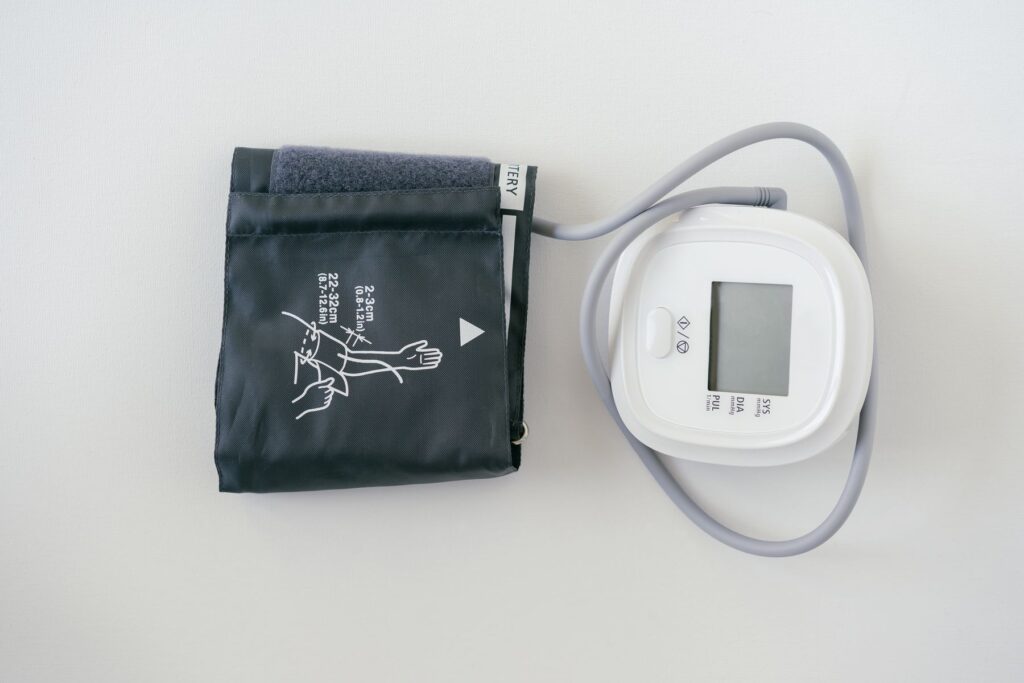
A home blood pressure monitor lets you see whether your efforts are paying off. Mayo suggests checking at the same time each day. Bring your log to appointments so you and your doctor can judge progress from many readings rather than a single number taken in the office.
BLOOD PRESSURE ACTION PLAN
Your first four weeks
- Ask your doctor whether isometric exercise is appropriate for you, and whether your medication should be reviewed as you become more active.
- Record a week of home readings at the same time each day before you change anything.
- Keep or build your aerobic base toward at least 150 minutes a week, plus two strength sessions.
- Add three short wall squat sessions a week, starting with easy holds and steady breathing.
- Compare your average readings after a month, remembering that full effects can take up to three months.
This article is for general information and is not a substitute for personal medical advice.
Are you a fitness or wellness professional with a member journey to share?