WORKING OUT AT HOME · MEMBER JOURNEYS
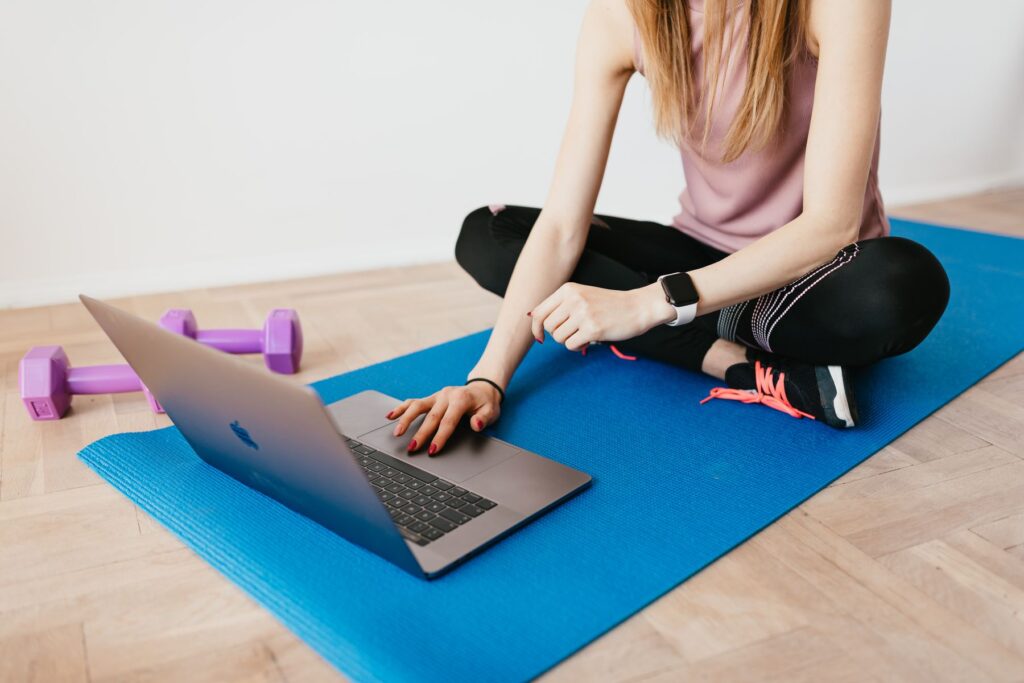
You have a laptop, a patch of floor and good intentions. What you need now is a plan that fits your body, your schedule and the way you like to move.
Choosing an online workout program can feel harder than doing the workouts. There are live classes, on-demand libraries, subscription apps and coaches who train you over video, and nearly all of them promise results. This guide helps you sort through the options: what screen-based training does well, what to check before you pay, how to set up your space, and how to keep going once the novelty wears off.
What an online workout program can and can’t do
Screen-based training is no longer a pandemic stopgap. The American College of Sports Medicine’s 2026 fitness trends survey of 2,000 clinicians, researchers and exercise professionals ranked mobile exercise apps fourth, noting that more than 345 million people used fitness apps in 2024. The same survey placed fitness programs for older adults second, a sign that more programs are being designed with midlife and older exercisers in mind.
The evidence is encouraging, with caveats. A 2021 meta-analysis in the British Journal of Sports Medicine pooled 28 randomized trials involving 7,454 adults aged 18 to 65 and found that people using apps or activity trackers took about 1,850 more steps a day than those who did not. The tools worked best when they included some personalization, such as tailored goals or feedback, and when text messages were added. The ACSM report notes that short-term gains have been shown, but long-term results need more research.
That is the honest picture. A good program removes the commute, the class schedule and the self-consciousness some people feel in a gym. What it cannot do is watch you. A video instructor will not notice that your knees cave in during a squat or that you hold your breath on every push-up. And because skipping costs nothing, the program only works if you build in your own reasons to show up.
Start with what your week needs
Before you compare programs, decide what a successful week looks like. The Physical Activity Guidelines for Americans call for 150 to 300 minutes of moderate aerobic activity a week, plus muscle-strengthening work on at least two days. The guidelines also dropped the old requirement that activity come in bouts of at least 10 minutes, so short sessions count.
Many online programs lean heavily toward one style, such as dance cardio, yoga or high-intensity circuits. That is fine if you fill the gaps elsewhere. If you love a flowing yoga library, for instance, you may still need a separate strength plan and a few brisk walks. Write down what you already do, then look for a program that supplies what is missing rather than duplicating what you have.
- If you are starting from scratch: look for a beginner track with sessions of 20 to 30 minutes and clear modifications for every move.
- If you want to get stronger: choose a plan that uses dumbbells, bands or bodyweight and adds load or difficulty week to week.
- If joints are a concern: filter for low-impact sessions with no jumping, and favor instructors who explain why each move is there.
- If motivation is the hurdle: live classes with a set time, or a coach who checks in, may serve you better than an open library.
Comparing online workout program formats
Most offerings fall into four broad formats. None is best for everyone; the right one is the format you will actually open on a Tuesday evening when you are tired.
| Format | Best for | Watch out for |
|---|---|---|
| Live-streamed classes | People who like a fixed time and the energy of a group | Little individual attention; schedules may not fit yours |
| On-demand video library | Flexible schedules and variety seekers | Choice overload and random sessions with no progression |
| App with a structured plan | Those who want each day mapped out and progress tracked | Generic plans that ignore your history or injuries |
| One-on-one virtual coaching | Beginners, returners and anyone with health considerations | Higher cost; quality depends on the coach’s credentials |
Whichever format appeals, run it through a few questions. Is the instructor certified by a recognized organization, and do they show options for different levels? Does the program progress over weeks, or does every session stand alone? Can you see the whole body of the instructor clearly enough to copy the movement? Is there a free trial long enough to test four or five sessions? And can you cancel easily if it does not suit you?
Set up your space before your first session
A little preparation removes the small frictions that derail home workouts. Clear a space roughly the length of your body plus an arm’s reach in each direction, and check the floor for rugs that slide. Place your screen far enough away that you can see the instructor from head to toe, ideally at eye level so you are not craning your neck to look down at it.
- An exercise mat with enough cushion for kneeling and floor work
- A sturdy chair without wheels for support and step-ups
- One or two pairs of dumbbells, or a set of resistance bands
- Supportive shoes for standing work and a water bottle within reach
If you would like to go further, our guide to building a home gym you’ll actually use covers equipment that earns its floor space. Then treat sessions like appointments: put them in your calendar with a start time, and lay out your mat the night before so the first step is already done.
How to keep going after the first month
Research on home exercise suggests that digital nudges help most at the start. A 2022 systematic review in Archives of Physiotherapy looked at 10 randomized trials in which patients were given home exercises, some with added web tools, text messages, phone calls or apps. Seven of the 10 trials found that the digital support improved adherence, and all four trials with follow-up under six weeks reported benefits. Over the longer term the results were mixed, and the authors concluded that the lasting benefit is unclear.
Those patients were in rehabilitation rather than general fitness, but the lesson carries over: a new app gives you momentum, and momentum fades. Plan for week five before you reach it.
- Anchor sessions to an existing routine. Working out right after your morning coffee or before dinner turns a decision into a habit. Our article on how long it takes to make exercise a habit explains why consistency beats intensity early on.
- Track something you can see improve. Note the weights you used, the number of push-ups you managed or how a session felt. A fitness tracker can help, but a notebook works too.
- Use the personalization features. If the program lets you set goals, choose session lengths or receive reminders, turn them on. These were the features linked with better results in the app research.
- Add a human. Join the same live class as a friend, share your weekly plan with your partner or book an occasional session with a coach.
- Refresh rather than quit. When a program grows stale, move to its next level or switch instructors within the same platform before abandoning it entirely.
When in-person guidance is worth it
Online training works well for many people, yet a few situations call for someone who can see you in the room. If you are new to lifting weights, a session or two with a qualified trainer can teach you safe technique for squats, hinges and presses, which you can then practice at home. If a movement causes pain, a physical therapist can work out why and adapt your plan.
Talk with your doctor before you start or step up a program if you have heart disease, diabetes, kidney disease, high blood pressure or new symptoms such as chest discomfort or unusual breathlessness, or if you are recovering from surgery or an injury. Online instructors cannot screen you, so that step is yours to take.
YOUR TRIAL-WEEK CHECKLIST
Test-drive a program in seven days
- Write down what your week already includes and what is missing.
- Pick one program and book three sessions in your calendar.
- Try one strength session, one cardio session and one mobility session.
- After each, rate it from 1 to 5 for enjoyment and for how clearly you could follow it.
- Check whether every session offered easier and harder options.
- Keep the program only if you would happily repeat it next week.
SOURCES AND FURTHER READING
American College of Sports Medicine · Top Fitness Trends for 2026
This article is for general information and is not a substitute for personal medical advice.
Are you a fitness or wellness professional with a member journey to share?