



STEPS AND PACE · FEATURED STORY
You already know walking is good for you. The more useful questions are how many steps actually make a difference, how quickly you should be moving, and how to build a habit that survives a busy month.
Walking for health has had a quiet upgrade in the research world. Large studies that pool data from tens of thousands of adults now let scientists estimate how risk changes with each additional thousand steps, and how pace fits into the picture. The message for anyone in their 40s, 50s and 60s is encouraging: useful targets are more reachable than the famous 10,000-step goal suggests, and even small increases appear to count. This guide covers what the evidence shows, how to judge whether your walk is brisk enough, and a six-week plan to build from wherever you are today.
What the step-count research shows
The most comprehensive look so far arrived in 2025, when researchers led by Professor Melody Ding at the University of Sydney pooled 57 studies covering more than 160,000 adults in a review published in The Lancet Public Health. Compared with people taking about 2,000 steps a day, those averaging 7,000 steps had a 47 percent lower risk of early death and a 38 percent lower risk of dementia, along with lower risks of cardiovascular disease and depressive symptoms.
Two details from that work matter for everyday planning. First, the authors reported that beyond about 7,000 steps, the extra benefits for most outcomes were modest, although Ding noted that for people who are already active, 10,000 steps a day is great. Second, they found that even modest increases, such as going from 2,000 to 4,000 steps a day, were associated with significant health gains. You do not have to hit a big round number to benefit.
An earlier analysis led by Paluch and colleagues, also in The Lancet Public Health, pooled 15 international cohorts with 47,471 adults. Risk of death kept falling as steps rose until roughly 6,000 to 8,000 a day among adults 60 and older, and until roughly 8,000 to 10,000 a day among those younger than 60. People in the most active quarter, with a median of 10,901 daily steps, had about half the risk of those in the least active quarter, whose median was 3,553.
Keep in mind that these are observational studies. People who walk more may differ in other ways, including their existing health, and researchers can adjust for those factors only imperfectly. Still, the consistency across dozens of cohorts is why public health researchers now treat daily steps as a meaningful, trackable marker.
Why your walking pace matters too
Volume is only part of the story. A 2018 analysis in the British Journal of Sports Medicine by Stamatakis and colleagues pooled 50,225 walkers from 11 British population cohorts and compared their self-rated walking pace. Compared with slow walkers, those who described their usual pace as average had a 20 percent lower risk of death from any cause, and brisk or fast walkers had a 24 percent lower risk. Links with cardiovascular death followed a similar pattern, and the associations were evident among walkers over 50.
Pace is also how ordinary steps become moderate-intensity exercise, the kind that counts toward the federal weekly targets. A stroll to the mailbox and a purposeful 20-minute walk might show similar numbers on your watch, but they ask very different things of your heart and lungs. Most people do best with both: plenty of easy movement spread through the day, plus some walking with intent.
How to tell whether your walk is brisk
You do not need a lab to gauge intensity. In the CADENCE-Adults study, published in 2020 in the International Journal of Behavioral Nutrition and Physical Activity, Tudor-Locke and colleagues tested 80 adults aged 41 to 60. A cadence of about 100 steps per minute corresponded to moderate intensity, and about 130 steps per minute to vigorous intensity. The researchers proposed these round numbers as practical targets anyone can check with a wearable or by counting.
To check your own cadence, walk at what feels like your brisk pace, count your steps for 15 seconds and multiply by four. If you land near 100, you are in moderate territory. If you fall well short, try shorter, quicker steps and a more active arm swing for a few minutes at a time rather than forcing longer strides.
The CDC offers another simple check called the talk test. During moderate activity you can talk but not sing; during vigorous activity you cannot say more than a few words without pausing for a breath. The agency lists brisk walking at 2.5 miles per hour or faster as an example of moderate intensity.
| Cue | Easy | Moderate (brisk) | Vigorous |
|---|---|---|---|
| Talk test | Full conversation, could even sing | Can talk, cannot sing | Only a few words between breaths |
| Cadence (adults 41 to 60) | Below about 100 steps per minute | About 100 steps per minute and up | About 130 steps per minute and up |
| How it feels | Relaxed, could go all day | Purposeful, breathing deeper | Hard, sustainable only in short bouts |
| Best use | Daily step totals, recovery days | Weekly aerobic minutes | Short intervals for extra fitness |
How walking fits the weekly guidelines
The CDC recommends that adults get 150 minutes of moderate-intensity activity a week, such as brisk walking for 30 minutes on five days, or 75 minutes of vigorous activity. It also calls for muscle-strengthening work on two or more days a week that covers the legs, hips, back, abdomen, chest, shoulders and arms. Activity does not have to happen all at once; shorter chunks count, and some activity is better than none.
That means brisk walking alone can cover your entire aerobic requirement. A practical way to picture it: your daily step total is the base of a pyramid, brisk minutes form the middle, and two strength sessions sit on top. For the full weekly picture, including where balance and flexibility work fit, our guide to how much exercise you need each week lays out a complete blueprint.
Walking does not replace resistance training. It works the legs modestly, especially on hills, but it will not build muscle and bone the way lifting does. Pair the two and each makes the other easier, since stronger legs make longer walks feel lighter.
A six-week plan to build your walking habit
The best starting point is your own baseline, not a number from a headline. Carry your phone or tracker as usual for five ordinary days without trying to change anything, then average the totals. Build from there in increments small enough that you barely notice them.
| Week | Daily step target | Brisk walking | Focus |
|---|---|---|---|
| 1 | Baseline plus 500 | Two 10-minute brisk walks | Find two routes you enjoy |
| 2 | Baseline plus 1,000 | Three 10-minute brisk walks | Check your cadence once per walk |
| 3 | Baseline plus 1,500 | Three 15-minute brisk walks | Add one gentle hill |
| 4 | Baseline plus 2,000 | Four 15-minute brisk walks | Walk after one meal each day |
| 5 | Baseline plus 2,500 | Four 20-minute brisk walks | Try one-minute faster intervals |
| 6 | Baseline plus 3,000, or roughly 7,000 to 8,000 total | Five brisk walks of 20 to 30 minutes | Lock in a routine you can keep |
If your baseline already sits near 7,000, shift the emphasis from more steps to better steps: more brisk minutes, a few hills and one longer weekend walk. If a week feels hard, repeat it instead of pushing ahead. The cohort studies above measure habits held over years, so the version you can sustain beats the version that impresses for a fortnight.
Making walking harder without making it miserable
Once a daily walk feels routine, there are several ways to raise the challenge while keeping it enjoyable enough to continue.
- Hills and stairs. Inclines raise your effort at the same speed and load the glutes and calves more. Steady footing is its own skill; our piece on feeling steadier on stairs and uneven ground covers the balance side.
- Brisk intervals. Alternate one to three minutes of fast walking with easy recovery, working up to 10 to 15 total minutes of faster work.
- Trails. Uneven surfaces challenge your ankles and balance, and time tends to pass quickly. If a longer hike is the goal, see our guide to training for weekend hikes.
- Company. A walking partner or group makes it easier to show up and harder to cut a walk short.
- A light pack. Carrying a modest load adds work for your legs and trunk. Start light and keep your posture tall.
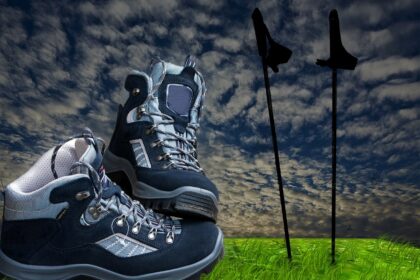
Comfortable, supportive shoes matter more than any gadget. Replace them when the cushioning feels flat, and favor well-lit routes with even pavement as the days get shorter.
If you live with heart disease, diabetes or kidney disease, are pregnant, are recovering from an injury or surgery, or have noticed new symptoms such as chest discomfort, unusual breathlessness or dizziness, talk with your doctor before stepping up your walking. Stop and seek care if any of those symptoms appear partway through a walk.
YOUR WALKING STARTER
Find your baseline in five days
- Days 1 to 5: carry your phone or tracker as usual and jot down each daily total.
- Day 6: average the five numbers. That figure is your baseline.
- Set your first weekly target at baseline plus 500 steps.
- Block two 10-minute brisk walks in your calendar.
- On the first brisk walk, count steps for 15 seconds and multiply by four.
- Choose one weekday route and one weekend route you look forward to.
This article is for general information and is not a substitute for personal medical advice.
Are you a fitness or wellness professional with a member journey to share?