



HEART HEALTH · HEALTHY AGING
Your latest blood test flagged a cholesterol number your doctor wants to keep an eye on. You’re wondering whether more exercise can move it, and by how much.
Exercise can help lower cholesterol, but the effect is more modest, and more individual, than many fitness claims suggest. It works best as part of a wider set of habits, and for some people it sits alongside medicine rather than replacing it. Here is what the research shows about how activity affects each number on your lipid panel, how much exercise it seems to take, and what else helps.
What your cholesterol numbers mean
A standard blood test called a lipid panel reports several numbers. According to the CDC, it measures LDL, often called “bad” cholesterol, which can lead to plaque buildup in your arteries when levels are high; HDL, the “good” cholesterol; triglycerides, a blood fat your body uses for energy; and total cholesterol. High cholesterol usually has no symptoms, so a blood test is the only way to know where you stand.
It is also very common. The CDC reports that from 2017 to 2020, 86.4 million US adults aged 20 or older had high or borderline high cholesterol, defined as a total of 200 mg/dL or higher. Most healthy adults should be checked every 4 to 6 years, and people with heart disease, diabetes or a family history of high cholesterol may need testing more often.
How much exercise can lower cholesterol
The largest recent analysis, published in Sports Medicine in 2025, pooled 148 randomized controlled trials involving 8,673 participants. Compared with staying sedentary, exercise training lowered LDL, triglycerides and total cholesterol and raised HDL. The authors described the improvements as significant but modest, in the range of 3.5 to 11.7 percent, and concluded that combining aerobic and resistance training was the best approach for managing unhealthy lipid levels.
| Measure | Average change with exercise training | Direction you want |
|---|---|---|
| LDL cholesterol | About 7 mg/dL lower | Lower |
| HDL cholesterol | About 2 mg/dL higher | Higher |
| Triglycerides | About 8 mg/dL lower | Lower |
| Total cholesterol | About 6 mg/dL lower | Lower |
Those averages hide a wide range. Based on the spread of results, the same analysis estimated that each cholesterol measure improved in only about one-quarter of studies, which suggests responses vary considerably from person to person and program to program. If your numbers barely budge, your workouts are still helping in other ways, as our guide to exercise to lower blood pressure shows; exercise simply may not be the main tool for your cholesterol.
Longer sessions appear to matter for HDL
Session length may matter more than you would expect. A meta-analysis of 25 randomized trials with 1,404 participants, led by Satoru Kodama and published in Archives of Internal Medicine in 2007, found that aerobic exercise raised HDL by an average of 2.53 mg/dL. The minimum amount linked to a change was about 120 minutes a week, or roughly 900 calories burned weekly.
The most influential factor was how long each session lasted. Among sessions of 23 to 74 minutes, every additional 10 minutes was associated with a 1.4 mg/dL rise in HDL, while frequency and intensity were not linked to HDL changes. In practice, that argues for building some sessions of 30 minutes or more rather than relying only on short bursts. Our guide to building cardio fitness shows how to lengthen sessions comfortably.
If your current routine is built around short walks, you don’t need to overhaul it. Stretch two or three of them into longer outings, add a bike ride or swim on the weekend, or walk to a coffee shop and back instead of driving. The aim is to reach a solid weekly total while making some sessions long enough to count.
Add strength training to your aerobic base
Aerobic exercise gets most of the attention in cholesterol research, but the 2025 analysis singled out combined aerobic and resistance training as the most effective option. The American College of Sports Medicine’s 2026 guidance on resistance training asks you to train every major muscle group at least two times a week, and it does not require a gym; bands, bodyweight exercises and home routines all count.
The same review found that equipment type, machines versus free weights, did not consistently change results for the average healthy adult, so choose whatever you will use week after week. If you are new to lifting, start with one or two sets of each exercise at a weight you could lift a few more times, and build from there. The habit of showing up twice a week matters more than any particular tool, and it brings benefits for blood sugar as well, as our guide to exercise and blood sugar explains.
A practical week might combine three or four aerobic sessions of 30 to 45 minutes with two short full-body strength workouts. Our article on choosing sets and reps can help you structure the strength side. Mayo Clinic suggests at least 30 minutes of brisk walking five days a week or 25 minutes of vigorous activity three days a week, and notes that regular exercise can help raise HDL.
Food and habits that work alongside exercise
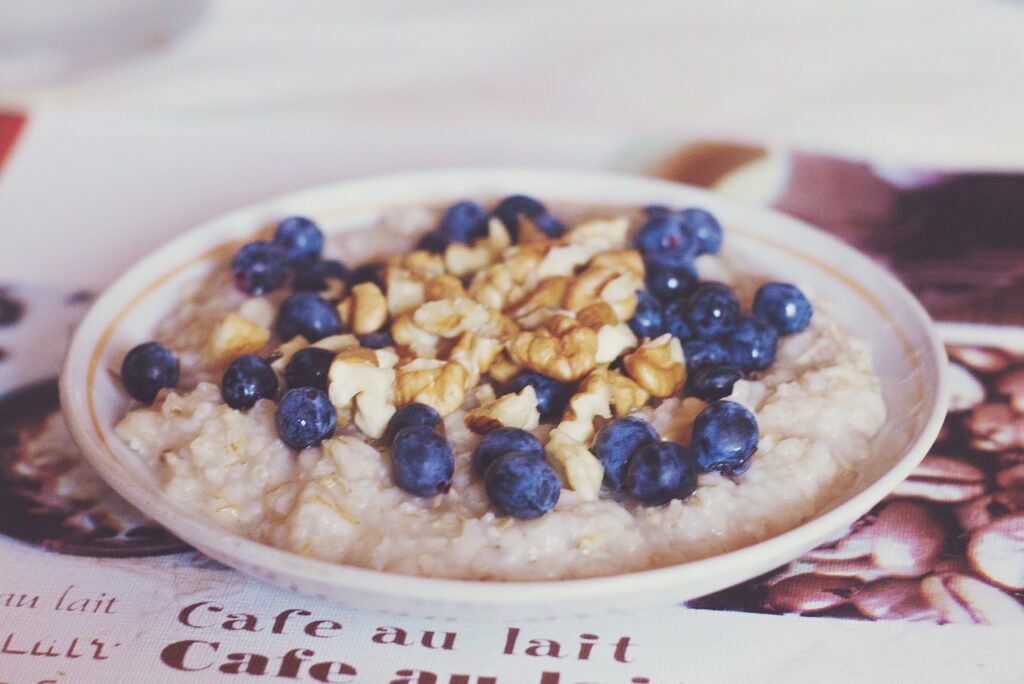
Mayo Clinic places heart-healthy eating first among its five lifestyle changes for cholesterol. It recommends cutting back on saturated fats, found mostly in red meat and full-fat dairy, and eliminating trans fats, which can hide in foods that list partially hydrogenated oil even when the label says zero grams. Soluble fiber, from foods such as oatmeal, kidney beans, Brussels sprouts, apples and pears, helps block some cholesterol from being absorbed, and whey protein supplements may lower LDL and total cholesterol.
Other habits matter, too. Mayo Clinic notes that even a small amount of extra weight can raise cholesterol, that quitting smoking can raise HDL, and that within one year of quitting, the risk of heart disease is cut in half compared with someone who still smokes. Omega-3-rich foods such as salmon, walnuts and flaxseeds do not lower LDL, but they offer other benefits, including lower blood pressure. If you drink, Mayo advises moderation, meaning up to one drink a day for women and up to two for men; moderate drinking has been linked to higher HDL, but that is no reason to start.
When exercise and diet aren’t enough
Mayo Clinic acknowledges that healthy habits alone sometimes aren’t enough to lower cholesterol. If your doctor prescribes medicine, take it exactly as directed. Keeping up your exercise and eating habits may allow a lower dose and can boost the medicine’s effect, so the work you put in still pays off.
Your doctor will weigh your cholesterol alongside other factors, such as blood pressure, diabetes, smoking and family history, when deciding whether treatment makes sense, so bring your questions to that conversation. And if you have heart disease, diabetes or kidney disease, have recently had surgery or an injury, are pregnant, or develop new symptoms such as chest discomfort or unusual breathlessness, get medical guidance before stepping up your training.
BEFORE YOUR NEXT BLOOD TEST
Give your cholesterol a fair test
- Build up to at least 150 minutes of aerobic activity a week, including several sessions of 30 minutes or more.
- Add two full-body strength sessions each week.
- Swap one high saturated-fat food for a leaner or plant-based option.
- Eat a source of soluble fiber, such as oatmeal or beans, every day.
- If you smoke, ask your doctor about support to quit.
- Ask your doctor when a recheck makes sense, and keep your results in one place.
This article is for general information and is not a substitute for personal medical advice.
Are you a fitness or wellness professional with a member journey to share?