GOAL EVENTS · MEMBER JOURNEYS
The first snow report lands, a trip goes on the calendar and suddenly your legs have a deadline. The weeks between now and your first chairlift ride are the best chance you will get to arrive strong, steady and ready to enjoy it.
A ski trip is one of the most motivating goal events there is. It has a fixed date, it asks a lot of your body and it rewards preparation in a way you can feel on the very first run. This guide walks you through ski season prep as a journey in stages: understanding what the sport demands, following an eight-week countdown, handling your first days on the snow and keeping your fitness through the winter. Whether you are returning after a few seasons away or simply want to ski the last afternoon as well as the first morning, the plan is the same.
Why Ski Season Prep Is Worth Starting Now
Skiing is wonderful exercise, but it is not gentle on unprepared bodies. The American Academy of Orthopaedic Surgeons cites U.S. Consumer Product Safety Commission figures showing more than 76,000 snow skiing injuries treated in hospitals in 2018. Knee injuries are very common, particularly to the anterior cruciate ligament, or ACL, and shoulder dislocations and “skier’s thumb” from falling onto a pole are frequent as well.
Timing matters. Writing for Cleveland Clinic, sports medicine specialist Molly McDermott, DO, recommends training at least six to eight weeks before your first outdoor adventure. Eric McCarty, MD, a professor of orthopedics at the University of Colorado School of Medicine who cares for the university’s ski team, gives a similar estimate, noting that building endurance can take about six to eight weeks. He also points out that recovery from ACL surgery can take nine to 12 months, which is a powerful argument for showing up prepared.
If your trip is less than eight weeks away, do not skip the plan. Start where you are, compress the early stages and choose easier terrain for the first day or two.
What Skiing Asks of Your Body
Downhill skiing combines sustained leg work with constant small corrections for balance. Your thighs and hips hold a flexed position for long stretches, your core keeps your trunk quiet over your skis, and your ankles and feet read the snow through stiff boots. Then there is the lift line, the altitude and the short walks in heavy gear, all of which add up.
Cleveland Clinic’s guidance groups the work into four parts. Strength comes first, with an emphasis on the lower body from the glutes to the ankles, plus the core and upper body. Endurance comes from cardio such as cycling, running, swimming or rowing. Balance and neuromuscular control teach your brain, nerves and muscles to work together for stability. Flexibility rounds out the list, supported by dynamic warm-ups.
McCarty adds that varied, dynamic training works better than doing only cardio or only weightlifting. He singles out core strength, balance and flexibility, and he notes that cardiovascular fitness matters more at altitude, where many resorts sit.
Your Eight-Week Countdown
This countdown assumes two strength sessions and two or three cardio sessions a week. Cleveland Clinic suggests that beginners start with bodyweight exercises, typically three sets of 10 to 15 repetitions, and that is the foundation here. Add load only when your form stays solid through every rep.
| Weeks | Focus | What to do |
|---|---|---|
| 1 and 2 | Build the base | Bodyweight squats, bridges, calf raises, side-lying hip abductions and planks; 20 to 30 minutes of easy cardio two or three times a week |
| 3 and 4 | Add load and single-leg work | Hold a dumbbell or kettlebell for squats, add split squats or step-ups, and extend one cardio session to 40 minutes |
| 5 and 6 | Make it ski-specific | Introduce side-to-side moves such as skater hops if your joints tolerate them, longer wall-sit style holds and balance drills on one leg |
| 7 and 8 | Sharpen and taper | Keep the intensity but trim the total volume in the final week, and rehearse the warm-up you will use on the mountain |
If loaded squats are new to you, our step-by-step guide to the goblet squat is a good place to start. For the cardio side, our guide to building cardio fitness explains how to mix easy sessions with a few harder efforts so your lungs keep up with your legs.
Strength and Balance Moves to Include
You do not need special equipment for most of this work. The exercises below appear in Cleveland Clinic’s ski conditioning advice, and each one earns its place for a reason.
- Squats. The foundation for the flexed-knee, flexed-hip stance you hold on every run.
- Side-lying hip abductions. Strengthen the outer hips, which help keep your knees tracking over your feet.
- Calf raises. Build the lower legs and support ankle control inside a stiff boot.
- Bridges. Train the glutes and hamstrings that balance out all that quadriceps work.
- Planks and oblique twists. Teach your trunk to stay steady while your legs turn beneath you.
- Skater hops. A lateral, springy move that resembles linking turns; start small and land softly.
- Push-ups. Upper-body strength helps when you push yourself up after a fall or pole across flats.
Skiing loads one leg at a time far more than most gym routines do, so it is worth adding the moves in our guide to single-leg exercises. Quick-footed drills from our article on step training also sharpen the reactive balance you use when the snow surprises you.
Your First Days on the Snow
All that preparation pays off only if you ease into the season sensibly. The orthopaedic surgeons’ advice is practical and worth following to the letter.
- Warm up before the first run. AAOS notes that cold muscles are more prone to injury and suggests three to five minutes of light activity, such as jumping jacks or marching in place, followed by a couple of slow runs.
- Pick terrain that matches your fitness. If you are out of shape, choose easier runs and work up to harder trails gradually.
- Respect the last run. Many injuries happen at the end of the day, when skiers try for one more trip down. Stop when you are tired or in pain.
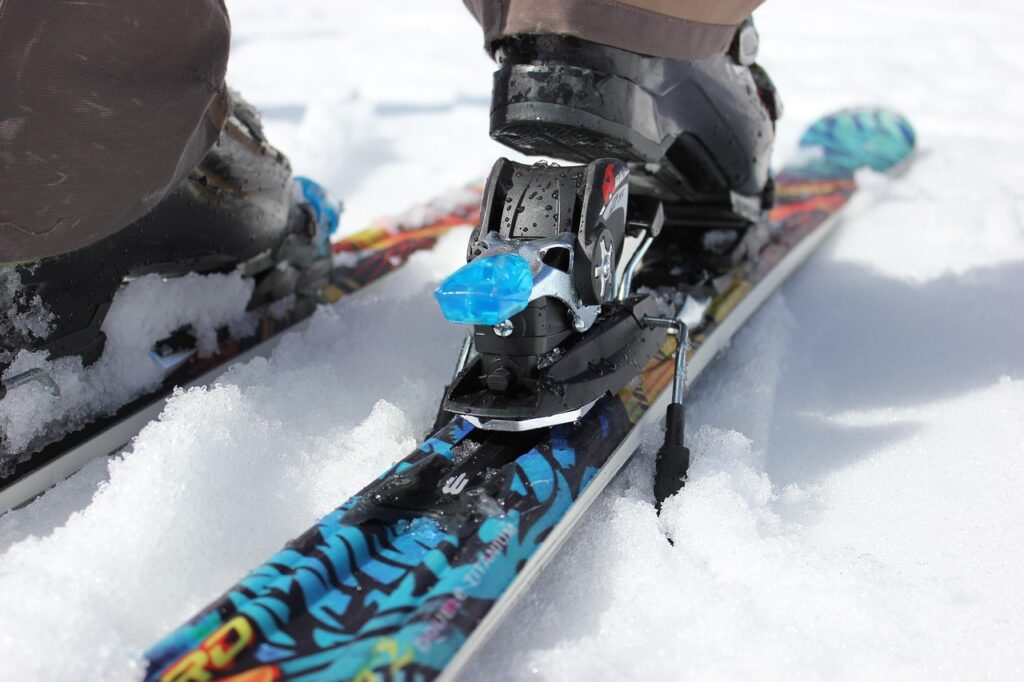
- Have your bindings checked. Boots and bindings should be set, adjusted and tested by a ski shop to industry standards for your height, weight and ability.
- Wear a ski helmet and goggles. AAOS advises against using a bike helmet on the slopes.
- Take a lesson. Lessons are especially important for new skiers, and experienced skiers benefit too. Learning to fall correctly can reduce your risk of injury.
Dress in several light, loose layers that resist wind and water, and plan a lunch break that lets your legs recover before the afternoon.
Staying With It Through the Season
The countdown does not end when the snow arrives. If you ski several times over the winter, keep one or two short strength sessions in your week between trips. They help you hold on to the leg strength you built, and they make each new outing feel less like starting over.
Pay attention to how your body responds after each ski day. Ordinary muscle soreness should fade within a few days. McCarty’s rule of thumb for the knee is simple: if it hurts to walk, that is a good sign to see an expert. Swelling, a pop at the time of injury or a knee that gives way also deserve prompt medical attention.
Finally, check in with your doctor before you start a new training plan or head to high altitude if you have heart disease, diabetes, kidney disease, high blood pressure, new symptoms, a recent injury or surgery, or you are pregnant.
YOUR PRE-SEASON CHECKLIST
Before your first chairlift ride
- Put your trip date on the calendar and count back eight weeks to set your start date.
- Book two strength sessions and two or three cardio sessions into each week.
- Schedule a binding check at a ski shop before your first day out.
- Try on your helmet and goggles together to confirm the fit.
- Plan a lesson, even a short one, for your first or second day.
- Decide in advance when your first day will end, and stop there.
This article is for general information and is not a substitute for personal medical advice.
Are you a fitness or wellness professional with a member journey to share?