



FIBER · HEALTHY AGING
You may track your protein carefully, yet fiber, the nutrient most Americans fall short on, rarely gets the same attention.
If you have wondered how much fiber you need, the answer depends on your age, sex and how much you eat, but for most adults the target is well above what lands on the plate. This guide covers the daily numbers, what fiber does in the body, what long-term research links it to, which foods deliver the most, and how to raise your intake without the bloating that sends many people back to old habits.
How Much Fiber Do You Need? The Daily Targets
Mayo Clinic experts give age-based minimums. Women 50 and younger should aim for at least 25 grams a day, and women 51 and older for at least 21 grams. Men younger than 50 need at least 38 grams, and men 51 and older at least 30 grams.
Mayo Clinic’s chart of high-fiber foods offers a second yardstick: 14 grams of fiber for every 1,000 calories you eat. At 2,000 calories a day, that works out to 28 grams. Either way, the goal lands somewhere in the 20s or 30s for most adults.
Most people fall well short. According to Mayo Clinic, 90% of the U.S. population consumes far below these recommendations, averaging only 15 grams a day. The newest Dietary Guidelines for Americans, the 2025–2030 edition released in January 2026, give increased attention to dietary fiber and its role in digestive and overall health, and they continue to name fruits, vegetables, whole grains and legumes as excellent sources.
What Fiber Does in Your Body
Fiber is the part of plant foods your body cannot fully break down, and it comes in two broad types that do different jobs. Mayo Clinic describes them this way:
- Soluble fiber dissolves in water and forms a gel that slows digestion. It can help lower cholesterol and blood sugar. Good sources include oats, peas, beans, apples, bananas, avocados, citrus fruits, carrots, barley and psyllium.
- Insoluble fiber does not dissolve. It adds bulk to stool and helps material move through the digestive system. Whole-wheat flour, wheat bran, nuts, beans and vegetables such as cauliflower, green beans and potatoes are good sources.
Together they deliver a long list of benefits, according to Mayo Clinic: softer and more regular bowel movements, a lower risk of colorectal cancer, lower LDL cholesterol, steadier blood sugar, and meals that feel more filling, which can make a healthy weight easier to maintain. Fiber pairs naturally with an active routine if you are working on your numbers; see our guides on whether exercise can lower cholesterol and on exercise and blood sugar.
What the Long-Term Research Shows
The most comprehensive look comes from a 2019 series of systematic reviews and meta-analyses in The Lancet by Reynolds and colleagues. It drew on 135 million person-years of data from prospective studies and 58 clinical trials involving 4,635 adults.
Compared with people who ate the least fiber, those who ate the most had a 15% to 30% lower risk of dying from any cause or from cardiovascular disease, and a lower incidence of coronary heart disease, stroke, type 2 diabetes and colorectal cancer. The greatest benefit appeared when daily intake was between 25 and 29 grams. Dose-response curves suggested that higher intakes may offer even greater protection against cardiovascular disease, type 2 diabetes, and colorectal and breast cancer.
Much of this evidence comes from observational studies, so it shows strong associations rather than proof that fiber alone caused the difference. People who eat more fiber often eat more whole, minimally processed food in general. For practical purposes that is not a problem, since whole foods are exactly where your fiber should come from.
Where the Fiber Is: A Food Guide
These values come from Mayo Clinic’s chart, rounded to the nearest half gram. Check the Nutrition Facts label on packaged foods, since fiber content varies among brands.
| Food | Serving | Fiber (grams) |
|---|---|---|
| Split peas, boiled | 1 cup | 16.0 |
| Lentils, boiled | 1 cup | 15.5 |
| Black beans, boiled | 1 cup | 15.0 |
| Chia seeds | 1 ounce | 10.0 |
| Green peas, boiled | 1 cup | 9.0 |
| Raspberries | 1 cup | 8.0 |
| Whole-wheat spaghetti, cooked | 1 cup | 6.0 |
| Pear | 1 medium | 5.5 |
| Broccoli, boiled | 1 cup chopped | 5.0 |
| Quinoa, cooked | 1 cup | 5.0 |
| Apple, with skin | 1 medium | 4.5 |
| Oatmeal, instant, cooked | 1 cup | 4.0 |
| Almonds | 1 ounce, about 23 nuts | 3.5 |
| Brown rice, cooked | 1 cup | 3.5 |
| Popcorn, air-popped | 3 cups | 3.5 |
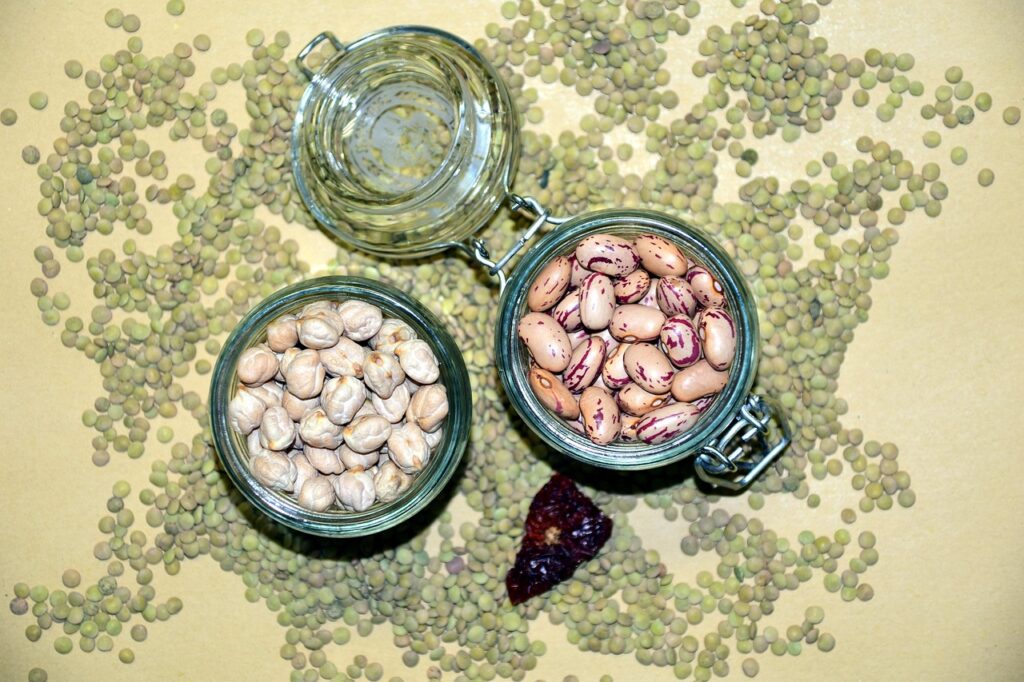
Legumes stand out. Mayo Clinic calls beans, peas and lentils excellent sources of fiber, and a single cup of boiled lentils covers nearly three-quarters of the daily target for women 51 and older. They also supply protein, which matters if you are trying to build and keep muscle, and the new dietary guidelines count them as both a vegetable and a protein food.
A Sample Day With About 29 Grams
You do not need unusual foods to reach your goal. Using the values above, here is an ordinary day that lands close to the range linked with the greatest benefit:
- Breakfast: 1 cup of cooked oatmeal (4.0 grams) topped with 1 cup of strawberries (3.0 grams).
- Lunch: a sandwich on 2 slices of whole-wheat bread (4.0 grams) with a medium apple on the side (4.5 grams).
- Snack: 1 ounce of almonds (3.5 grams).
- Dinner: 1 cup of cooked quinoa (5.0 grams) with 1 cup of boiled broccoli (5.0 grams).
That adds up to 29 grams before you count the vegetables in the sandwich or any beans you might stir into a soup. Swap the quinoa for a cup of lentils and the day climbs by more than 10 grams. If you are a man under 50 aiming for 38 grams, a pear as an afternoon snack plus a half cup of black beans at lunch closes the remaining gap.
How to Add Fiber Without the Discomfort
The most common mistake is doing too much too fast. Mayo Clinic offers these tips for a smoother transition:
- Increase fiber gradually over a few weeks. Adding too much too quickly can cause gas, bloating, cramping and diarrhea.
- Drink plenty of fluids, since some fiber works best when it absorbs water.
- Make at least half your grains whole grains, and look for whole wheat near the top of the ingredient list.
- Choose breakfast cereals with 5 or more grams of fiber per serving, and top them with fruit.
- Snack on whole fruit, raw vegetables, unsalted low-fat popcorn or whole-grain crackers.
Whole foods are the better choice over supplements. Mayo Clinic points out that fiber supplements do not provide the variety of fiber, vitamins, minerals and other nutrients found in whole foods. If you do use one, check with your healthcare professional or pharmacist first, because fiber can reduce how well some medications are absorbed, and Mayo Clinic advises against adding more than 50 grams of fiber a day from a supplement. If you have a digestive condition or have been told to follow a low-fiber diet, follow your clinician’s guidance.
YOUR FIBER UPGRADE
Three swaps to make this week
- Trade white rice or pasta for brown rice, quinoa or whole-wheat pasta at two dinners.
- Add a half cup of beans or lentils to a soup, salad or grain bowl three times.
- Keep whole fruit where you can see it, and eat one piece with the skin on each day.
Raise your intake gradually, drink an extra glass of water with fiber-rich meals, and notice how you feel after two weeks.
SOURCES AND FURTHER READING
Mayo Clinic · Chart of high-fiber foods
Mayo Clinic · Dietary fiber: Essential for a healthy diet
Mayo Clinic News Network · Mayo Clinic Q and A: What’s the best way to boost your fiber intake?
Oklahoma State University Extension · The New Dietary Guidelines for Americans 2025–2030
This article is for general information and is not a substitute for personal medical advice.
Are you a fitness or wellness professional with a member journey to share?